Friday, March 17, 2006

ST. PATRICK’S DUH

I love Irish people. Some of my best friends are Irish. God bless the Irish and their homeland, Ireland. Lucky Charms is the best concoction of oats and sugar ever poured into wax paper bags and sealed into colorful cardboard boxes with plastic prizes at the bottom, wrapped in cellophane. But St. Patrick’s Day is the most asinine holiday on the calendar.

Any true Irish person—any noble Irish person—distances him or herself from this absurd day. It is named after a person who, at sixteen years of age, got carried away from his homeland, Britain, by Irish marauders. He passed his captivity as a herdsman near a mountain called Slemish. He saw visions (uh-oh) in which he was urged to escape to the north coast of Gaul and become an ordained deacon (double uh-oh). The encyclopedia does not say who spoke to him in the vision, but one can only assume that it was a leprechaun.

leprechaun (lep re kon), n. Irish Folklore. A pygmy, sprite, or goblin.

ST. PATRICK: What are you?

LEPRECHAUN: I am a pygmy and a goblin, but you can call me a sprite. Yes, I prefer that. A sprite, if you please.

ST. PATRICK: What do you want me to do—sprite?

LEPRECHAUN: I want you to escape to the north coast of Gaul and become an ordained deacon. Become learned in the ways of institutional religion. And don’t forget to condemn people and look for relics.

ST. PATRICK: At once, Sprite! Is that all?

LEPRECHAUN: (becoming furious) Well, of course not! I want you to begin experimenting with compressed marshmallows and geometric figures!

ST. PATRICK: Yes, my Lord!

LEPRECHAUN: Yes, my Sprite!

ST. PATRICK: Forgive me, my Lord!

According to the encyclopedia, “[St. Patrick’s] use of the shamrock as an illustration of the Trinity led to its being regarded as the national Irish symbol. A strange chant of his, called the Lorica, is preserved in the Liber Huynorum.” That the Trinity is a false doctrine unknown to Scripture makes me wish for the shamrock a more noble beginning. (Fun game you can play at home: Guess the root word of “shamrock.”) Can’t we just say it illustrates the number o’ people able to make sense o’ St. Patrick’s Day?

Speaking o’ o’, without this famous contraction in “the luck o’ the Irish,” we are left with: “the luck of the Irish,” which is too literal, too sad, and too untrue for anyone’s palate. The Irish are no luckier than any other peoples. In fact, if the Great Potato Famine and the long history of bloodshed mean aught, the Irish are unluckier than most. This contraction, ‘o, is paramount to the furtherance of the Irish myth. It’s the grammatical equivalent of pixie dust. Anything becomes possible when you drop an “f” and apply yourself stupendously at the pub.

Which must be how the famous Blarney Stone came about. At Blarney Castle in the town of Blarney in County Cork, Ireland, is an inscribed slab. No ordinary slab, this. Did you not hear? I said it was inscribed. Are you still not in awe of it? Then I unsheathe my ace: It is “near the top of one of the walls.” (!) According to legend, one who kisses this stone is thereupon endowed with the gift of eloquence and persuasive flattery. This answers, for me, a mystery. Whoever convinced our government to calendarize St. Patrick’s Day and make Irish and non-Irish people alike wear green clothes and send each other hokey cards, must have smooched that rock smooth.

My youngest son came home from school today and said there was a new tradition: anyone not wearing green became susceptible to a pinch. “A pinch where?” I asked.

He said, “Anywhere.”

I apprised his clothing. “You’re not wearing any green. Did they pinch you?”

He said, “I’ve got it covered, Dad,” and he unveiled the tops of his boxer shorts, which were covered with palm trees.

“Happy St. Patrick’s Day,” I said.

“And the same to you, Pops.”

© 2006 by Martin Zender

Thursday, March 16, 2006

IN LOVE WITH MYSELF

A practical example of what I wrote yesterday came to the fore in the kitchen this morning. Melody asked if I got sandwich bags at the grocery store. I said, “No, I forgot. I got them for my office, but not for the house.” Then I decided to add, “I was looking out for Numero Uno.”

I’ve said that to my family more than once. I’m half joking. I’m not sure they get me, and I don’t strain to explain myself. My actions speak louder than my words to them, I think. My family knows that I give them everything. I have given my soul to them and thrown my last literal dollar toward their welfare. And yet when it is obvious to them that I’ve done something for the Z-Man first, I play it. I play the part of the quintessential cad and chant the mantra of the eon: “Looking out for Number One.”

And yet it’s a scriptural concept: “Love others according as you love yourself.” If you do not love yourself first, you cannot love others. If you do not take care of yourself first, you cannot take care of others. Loving and taking care of oneself is not an end (that’s the world’s concept) but a means to an end, namely, doing the same thing for others.

Not many people grasp this. In the interest of “selflessness,” people lose their peace, their minds, their spouses, their kids. By working tireless for others at the expense of their own happiness, the so-called “superperson” harms instead of heals. When you have too much to do and not enough time for it, you yell. When you desperately need rest but never get to bed on time, you cry. When your own health fails because you live for the health of others, you die. Screamers, weepers and dead people—these we do not need. Might I suggest: 1) disappoint at least three non-family members four times a week, 2) go to bed before nine thirty on a nightly basis, and 3) rise before the sun and take a long walk.

When the sun comes up, then for God’s sake, 4) buy sandwich bags.

© 2006 by Martin Zender

Wednesday, March 15, 2006

PASTOR DISASTER

Life goes on, even for non-pastor types. Remind me to tell you sometime about why I am a teacher and evangelist and not a pastor.

Very well, then. I’ll do it now.

God gives different gifts to those in the ecclesia. Some are pastors, some are teachers, some are evangelists, some are jerks, and so forth. I am a teacher and an evangelist, but not a pastor. I have checked all my bones, and not one of them is a pastor bone.

The word pastor, in Greek, is poimen, and it means, “shepherd.” A shepherd is one who tends sheep. A shepherd has to hang around sheep all day and all night. He has to lead, feed, water and guard the sheep. He is burdened daily and nightly with the care of the sheep. Don’t take this the wrong way, but I do not have it in me to guard, feed (literally feed, with food) or water you. It is all I can do to guard, feed and water my family. I water them well because I bought a Culligan reverse osmosis water filter for our home. But I cannot buy a Culligan reverse osmosis filter for your home. I can’t even say, “I wish I could, but I can’t,” because I do not even wish I could. It is simply not in me to stretch myself this thin. I do hope you get one of these filters, though—I do. I want you to have good water, but I shall not be concerned and burdened by the thought. I simply cannot afford to lose sleep over your water condition. But do look into the Culligan filter, not for my sake, but for yours.

I’m too tired to lead you. To lead you, I might have to stay up past 8:30 p.m., which I am unwilling to do. To feed you, I would have to go to the grocery store yet again, which I already go to about three or four times a day because the four other members in my immediate family need different things, all at different times. It’s all I can do to keep my own family in milk. Everyone drinks different kinds. And they all run out at irregular intervals. If I screw up this milk situation, then I’ve really blown it in life, and I don’t want to do that.

I thank God that I’m not a pastor. Lots of pastors I know neglect their own families. The fact that so many pastors do this makes me think that the people are not really pastors. If they were really pastors, God would give them supernatural ability to care for their families first, then shepherd the people of God later. Real pastors must be able to survive on scant sleep. That isn’t me; I get up at 4:30, but I go to bed at half past eight. I do okay on seven hours, but anything less makes me want to nap or die. Real pastors must have broad shoulders and sturdy backs. That isn’t me; I do do resistance training to build my deltoids and latissimus dorsi, but this is so I will feel good and look sexy, not so that I can shepherd you and your kin. I’m sorry. Please don’t take that personally.

I do feel the burdens of the world, but in an impersonal way. I weep for the miserable occupants of this planet, I do. Disasters tear me up. When I read in the newspaper of a fatal car accident, I’m troubled. I can mourn for days over people I don’t even know. I weep for the race, but this does not necessarily make me send a card.

I do not cook spaghetti for the sick. Maybe I should. I thank God that not everyone is like me. Thank you, God and Jesus, that so many people do not think like the person I have become. If I was in the hospital, I would want spaghetti cooked for me. (No meatballs, please, just plenty of marinara sauce.) Perhaps this is real lack on my part. Maybe there is something wrong with me. I’m willing to admit that there is. Or maybe it’s simply that I’m not the pastor type—I am much more willing to admit to that.

I pray for people constantly, but with inarticulate groanings rather than with formulated words. Whether this helps people or not, I don’t know. I suppose it does, only because the spirit is praying instead of me. I do formulate words on occasion, but not that often. When people are on my mind in a general way, then I consider that praying for them. People say, “Pray for so-and-so,” and I say “Surely, I will,” and then I’ll think about that person for about thirty seconds or so, and count that as praying for them. After that, the spirit takes over. The apostle James would scold me for this because he says what good is it to pray for people if you don’t bring them warm mittens in the winter? I believe I’m paraphrasing the man. Well, if you really need mittens, I’ll send them to you. If someone approached me and severely needed mittens, I would surely render the mittens. I am a decent human being that way.

I heard another teacher, Ray Prinzing, tell a parable of the torrentially running river and the ocean. He said that the torrentially running river isn’t much practical good because you can’t put a boat on it, you can’t fish from it, you can’t swim in it, and so it goes. But the river is doing something, that is, it’s rushing to the ocean. In fact, it’s rushing because of the ocean. When the water of the river gets to the ocean, it can bear the greatest of seafaring vessels. Ray said that he was like the roiling water of the river, rushing to get to God. Not much practical good now, but just wait.

The sooner I get into God, the sooner I’ll be able to make James happy.

I still do some good now. People get blessed by my writing and speaking. Teaching suits me because I can drop a truth and run. Instead of giving you fish and giving you fish and trying to hook you another big fish, I can hand you a pole and go home. I give you principles. I make tapes or CD’s, or I write things, then I go away; I love doing this. It’s a fantastic method for me because you can learn about God from my pen or my voice while I’m home sleeping, or eating spaghetti at the hospital.

It takes special skills to pastor, but also to teach. The teacher must be able to ignore people and not consider their feelings. This is hard for some people to do. Some people never can learn it. My wife, for instance (God bless her) can neither do nor learn it.

I am willing to help people, but I like for people to be able to help themselves. I love to be appreciated and complimented, as long as no one asks me to pastor or boil pasta. I love to be hugged and kissed, but all within reason. (Melody is the exception to this rule, of course, and for this very reason I am considering shaving my facial hair. Melody pulled out a dish brush the other day and scrubbed my lips with it and said, “How do you like kissing that?” And I said, “Well, it didn’t feel very good, but I am becoming emotionally attached to the brush.”

I told Melody that I would shave off my facial hair, if it meant that I could begin kissing her unreasonably. Melody said, “But I love how you look with it.” Sigh. What am I to do? This is another topic entirely, so I will forgo it for now. But do you see? I can’t stop talking about my situation. I would make a lousy pastor, due to this. Pastors must talk incessantly about you. I do want to help you with your situation, but I can do that best by writing books for you, and talking to all of you at the same time on a tape or a CD. In this way, ZenderTalk works for me. It works better for me than visiting each of you individually, buying each of you a water filter, or constantly running to the grocery on your behalf, or fending off your many kisses with my bristly face.)

In all this I am trying to justify myself for not visiting the nursing home to see Herb.

Looking back, I see that I haven’t done it.

Damn.

© 2006 by Martin Zender

Tuesday, March 14, 2006

THE DEATH OF HERB DIRKS

I just found out this morning that Herb Dirks died.

God sent Herb to the Earth via Germany before the Second World War, and he suffered during that conflict and never recovered from it. He saw people burned alive and took a rifle butt to his head. He was a good boy, but he stuttered and became a prisoner of war as a youth. God drew him to Himself through much pain. It is through much tribulation that we enter into the kingdom.

Herb came to our Bible studies when we held them at our home. He was big and thick, like a tank, and powerful with his accent and that ferocious stutter. He wore his hair in a crew cut, or grew it out white like a wild man—these two styling options. In the wild phase, his hair stood tall like Wolfman Jack’s. He would not have known The Wolfman, however; he strove to know nothing but Christ, and Him crucified.

Herb shaved irregularly, and this, combined with his other traits, frightened nearly everyone. He talked loudly and inadvertently spit. I met him in his latter fifties. Herb slapped you on the back with tears in his eyes and loved you like a bear; he cried so easily. He prayed for you always and followed up by bringing you things. When my family was struggling, in he would march with a watermelon, or pop, or a bag of groceries—always crying, always pressing toward you, forever loving you.

No one loved God more, or cried more, or felt more. Herb was like Jesus, so sensitive to the world was he. Every moment throbbed with meaning for Herb. He was unfathomable because of this, and, unlike Jesus, occasionally overbearing. We sometimes fought. He commandeered Bible studies. When Herb took the floor, the floor disappeared. Simple questions had Swiss-gearing answers, beginning in Genesis One and ending somewhere in Revelation. Herb drove me crazy. He spit on our rug. He inadvertently insulted unfortunate guests. (This came from knowing only Christ, and Him crucified.) There was nothing to do but sit back and sigh—and try to stay within grasping distance of Herb’s train. If you heard only half of a Herb Dirks speech (the national average), you prospered. You visited the sanctuary of God and met Christ.

I told him I stuttered, and we fellowshipped around that. He loved me for confessing it, and wept for my confession. It was Herb who told me minutes before my first public address: “Get up, speak up, shut up.” He saved me that day. That was thirteen years ago, but I recall that mantra still, whenever I approach a podium.

Herb mourned the adulthood of his daughters. There were no earthly beings more precious to him. He took his young family to so many scripture conferences. He missed that so much when his daughters grew up and married. He hated it when they all got jobs that took them away. He pined for the days when those little girls needed him, when they held his big hand. Herb’s wife, Barb, had diabetes and seemed tired all the time. She was never that well when we saw her, which was rarely. She preceded her husband in death by three years.

Herb must have died slowly in the nursing home. Three years in a nursing home, thirty-five miles from my home. Thirty-five miles, and I never once visited him.

And so I go to my bedroom now, and cry.

God have mercy on me.

© 2006 by Martin Zender

Monday, March 13, 2006

TOWN JUNK

My town is junky with weak stabs at civility, sometimes painted gray and Bahama blue. But mostly the paint is peeling and dilapidation sings songs that sound like animals croaking, especially frogs.

Up over the signs through bricks and agecracks, red leaves appear in plaster as in the days of Roosevelt.

Nothing loves Crescent Road except pick-up trucks and roosters—and saws run by chains, and dismembered fingers.

What do people have against wood here? Against fingers?

The water tower fumes; the stones blame the track, but the tower points backward, and the track clacks heavily under trans-Atlantic bins. People admired the sidewalks, circa 1953. This settlement had prostitutes, but they depressed themselves and left in the early 21’s.

Two cops shot a bank robber in 1925. They stood him up in the corner so that little girls could wave pansies at him. They dressed him in a funny hat matching the gurgle he left Earth with. I think about him often, when the bank temperature fades.

The town here is Still Life with Weeds Growing Up. The smith makes shoes off the nail in the sod over the handle of his saddle-whapped horse, then leaves. The only cure for depression here is bananas, freshly peeled. Stare at the virgin banana flesh; stare. Off-white banana meat makes such happy eating. Devour the meat; it could never be nourished here.

No one cries for mercy in this town; I alone do that. People buy white bread and the cancer sticks of camels. I do not buy white bread and cigarettes. Interesting.

The trains come barging through this town, do they ever. Fat, stupid trains; lumbering crapyards laden with coal. Rusty tipbins, dory-sized, and ‘numdrums, too. The trains bangle bridges and fart out their hopes. They knock out the canopy people and pass o’er graffiti. They blast from their chutes and dangle where they are. Down go the dead cars past bins of recyclement.

Nothing recycles here, though; nothing at all. Everything is old and stays old through the weather. Loose dogs mangle down the sidewalks like monkeys. Cops cruise through dishevelment to inspect the crumblings; their speeding faces wax cherubic in the rainlight of “discovery.”

The wind blows, always.

People knife people here, and shoot people, and hit their brothers, then lumber through the woods on four-wheeled escape buggies. Twinkies sustain them on their branch-infested getaway. Someone won the lottery once—eight miles away.

The ice cream stand is God, and sundaes are Jesus. Some women should not wear sweatpants, ever. No woman should ever wear pajama bottoms in public. Men should and do wear sweaties and sleeperpants whene’er they let doors fall into the faces of fat mamas. Birds continue to crap here when they fly o’er the traincars. The band marches past the Independence Day puddles, and e’er out of tune are they—e’er out of tune.

I wish they had fixed up the robber in ‘jammy pants. The girl wanted him wrung on an ATV, but her mama got him whapped on his stubble with Marlboros. Cover him, I say, with ice cream that is soft. Bury him in snow-colored bread that is old. Suffuse him with bologna that is perfectly round, and discount his milk, no, not ever.

Soon, it will be over, and it will probably be windy. God will arrive; He’ll destroy all the quirkies when He’s finished with Babylon.

Come quickly, one world religion, thank you. Thank you, God, for placing me here, for I do like the statuary and the discounted milk. One woman wears miniskirts, and there are lights on the poles. I like the gas and electricity; I like cats. No one will ever find me here, no, not ever. I like all the roads where the cows shit bran flakes, all done freely without benefit of pants. The smell of the wheat dung justifies my tenure here; the wind brings it to my nose. It returns me (the wind) to memories of Jerusalem and the Bethany Road, when Barrabas shot the bank robber and dressed him in a Sponge Bob hat.

© 2006 by Martin Zender

Tuesday, March 07, 2006

FROM THE TREES SHALL COME MY HELP

So I thought to myself, How can I get smaller and lighter? From whence will come my newest portable shelter? Am I destined to sleep in bubble wrap? Then so I shall!

Well, no. I didn’t want to sleep in bubble wrap. I still don’t. Try to imagine that. The wrap would be comfortable, yes, but every time I rolled over I would pop and wake myself up. And not just one pop, but dozens of them. Rolling from my side to my back, I would sound like the Fourth of July; Independence Day in the middle of the woods; the crackle of machine gun fire; Jiffy Pop that can’t sleep. What I needed was a bivy bag.

“Bivy” is short for “bivouac,” which, according to the Rand McNally Collegiate Dictionary, is “a military encampment made with tents of improvised shelters, usually without shelter or protection from enemy fire.” Soldiers camped in open spaces require proximity to the ground; jutting into the horizon even a foot could spell the loss of a foot, or another vital appendage. The bivy sack, then, was not a tent, but a glorified bag encasing the sleeper, shedding rain, fellowshipping with the groundlife. Because campgrounds on the Pittsburgh walk might not appear when I want them to, I felt I needed stealth camping capability. (That is, trespassing capability.) And nothing seemed better suited to that than a bivy.

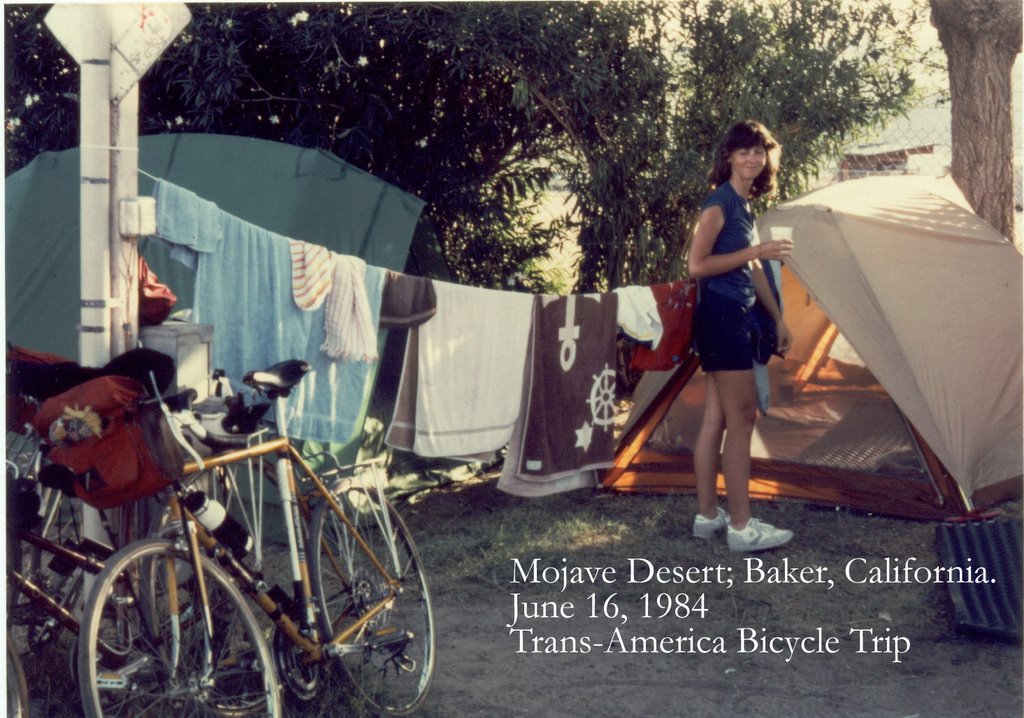
Stealth camping is not my method of choice; I would prefer a bonafide campsite. I have never stealth camped in my life. Okay, I take that back. My friend Jim and I stealth camped in the Mojave Desert once, near an on-ramp to Interstate 15, outside Barstow, California. My wife and I stealth camped in a cemetery. (Yes, we did. Scenery Hill, Pennsylvania. September, 1984.) And I stealth camped at a rest stop in Utah once, in the woods behind the restrooms. I also just remembered that my same friend Jim and I “stealth” camped on a bench at a shopping plaza in Monroe, Michigan. We also “stealth” camped on the town green in Hemet, California. And Melody and I “stealth” camped on a town green in Fresno, Ohio.

I put “stealth” in quotation marks in the above examples because it’s not stealth camping when you’re in the middle of the middle of a town beneath an orange halogen lamp. This is bold, stupid and thus, perhaps, brilliant. No one bothers you—at least this has been my experience. People assume you have permission. No one is so bold to camp in sight of the world unless they’ve consent from the police, the mayor, and a majority of city council. But now that I think about it, camping in shameless places may be the best option yet. The choices become limitless: restaurant parking lots (tough to drive stakes through), schoolyards, churchyards, the post office, the library, next to the civil war cannon (or, for solo campers, in it), between the pumps at the BP.

I want nature, though. I want simplicity. I crave a degree of remoteness on this trip. I don’t want to hear mail sorted, or the clanking, through the night, of book and video return chutes. I do not want shot from a canyon, nor do I wish to mingle with the demons of the churchyard. I should not reek of wiper fluid in the morning; I should not want my oil checked.

I could lay my bivy bag anywhere in any woods—if need be; that is, if no proper campgrounds manifested themselves.

So I went online and googled “bivy bags.” I may as well have googled “death shrouds.”

Might I say: these products lacked size. Occupied, they resembled large and very uncomfortable caterpillars. (Struggling caterpillars, even; hurting and discouraged caterpillars.) Some of the bags had a small pole at the head that formed a hoop the circumference of a basketball. This feature kept the top of the bag three inches off the camper’s face. This was what I wanted, for sure. I wanted that kind of luxury. I wanted to be able to blink and stick my tongue out if I wanted to. I wanted to be able to itch my nose. These models were advertised as “SPACIOUS!” “ROOMY!” and “BIG ENOUGH TO SNEEZE IN!” This was for me. Still, I kept looking for something better.

Two days ago, I found it: www.hennessyhammock.com. A hammock! Look at this. At only 32 ounces, it rolls up smaller than a package of hamburger. It includes a rain fly that is strung just above the mosquito netting and staked out for total rain coverage. Two trees, and you’re up. Smooth, level ground? The hammocker doesn’t need them! The hammock takes three minutes to hang, four if you’re an idiot. You enter it by poking your head up the middle; yes. There’s a slit at the bottom, running halfway up. You poke in your head, turn around, sit down, bring up your feet, lay down, and your weight makes the slit disappear. Magic!

In pleasant weather, you stare through the mosquito netting at the stars while no insect on earth, no matter its size, disturbs your reverie. In windy weather, you rock gently to sleep. Position yourself diagonally and the hammock lays magically flat. There is room to spare at both your head and feet. The netting rests taut, a foot off your face. You may thus eat, read, or play pattycake with visible planets.

Suspended in the air! My realm is inherent among the celestials, so what better way to sleep, for me, than suspended off the ground? No terrestrial soldier, I! Son of the living God; my God! He, Himself, is enthroned on high in the company of angels. Besides, I don’t want to be trampled by deer, mice and rabbits.

I have pictured myself in a driving rainstorm at night, high and dry, a small electric lantern clipped to an interior hook, reading a book, snuggled into my down sleeping bag, dipping at leisure from a bag of pretzels; at one side my glowing blue Sirius radio—a Christmas gift from my sister—the antenna snaking up the tree at my head, dutifully receiving signals from a satellite in space; at my other side a cell phone, connected to Melody with whom I am whispering through a tiny headset—all while suspended between two trees in the middle of a Pennsylvania woods; I want this.

Hammocks, I have discovered, are as old as man. The Mayas used them exclusively; you would never catch a Mayan on a cot, or a Sealy Posturepedic. They napped, overnighted, made love, birthed, lived and died in their hammocks. It is probable that our Lord, while asleep in the fishing boat on Galilee during the storm, lay ensconced in a hammock. Mariners have utilized hammocks for centuries, stringing unused sails between masts and enjoying a restful night’s sleep no matter the waves.

According to a testimony on the website, a sixty year-old man, a nature lover, thought his camping days were over. He suffered hip pain, back pain, pain in his shoulder, pain in his pain. Simply contemplating a night in a tent on the unforgiving ground made his joints throb. Then someone told him about the Hennessey Hammock. He tried it on a short camping trip and—Glory! For the first time in four years, he awoke feeling fine. The guy was so excited that he came home, pounded two giant eyebolts into posts in his living room, and strung his hammock there. Now whenever he wants assured of a painless night’s sleep, into the Hennessey he goes.

I intend now to save up for the backpacker, ultralight version. In the meantime, I dream about it: a bag of pretzels, calm nights, stars or rain, swaying to sleep in a gentle breeze. With sustenance and shelter we shall be sufficed.

And now, “May the Lord answer you in the day of trouble! May the name of The God of Jacob set you securely on high!” (Psalm 20:1).

© 2006 by Martin Zender

Monday, March 06, 2006

VENTI EXPERIENCES AT THE BOOKSTORE

I’m still going to tell you what I found on the Internet yesterday, but I must review now my trip to MallTown Friday, and what happened at the Barnes & Noble—before I forget.

MallTown is my name for the suburb twenty-five miles south of here that contains all the staples of indulgent shopping and fat-filled food. The shopping staples include Staples, Penny’s, Macy’s, Old Navy, Target, Wal-Mart, and such. Among the emporiums of fat are Chi-Chi’s, Red Lobster, Friday’s, Chipotle, Olive Garden, Outback, Cheddars and the like. The only real food in MallTown sits in bun ovens and veggie bins at Subway. Subway is the only fast food in America that has a right to the title, “food.” One may be assured of a square meal at Subway as long as one answers “No, thank you” to the requisite cash register question, “Would you like chips and a drink with that?”

MallTown contains a mall, of course. On weekday mornings only lonely people, walkers, and self-employed writers go there. (Sometimes these are combined into the frankenstein: self-employed, lonely writer/walker.) On weekday mornings and early afternoons, malls are barren of fun, and nearly of life. I encountered a middle-aged walker swigging a Starbucks as he went, and this was the main hive of activity. Old people sat on benches with hands atop their canes. The modern mall may be the geriatric version of the singles bar.

“Hello.”

“I know.”

“Wanna go to the hearing aid store?”

“Oh, I just had lunch.”

“What do you say we date?”

“The thirteenth.”

Mall employees at midway kiosks endlessly adjusted their product. As for me, I sought the Radio Shack; I needed high-bias, metal cassette tapes for the re-launch of ZenderTalk. I walked around so many times looking for this store that I encountered the Starbucks man seven times. It turned out that the Radio Shack had moved. I found out later from my sons that it was on Linwood Avenue now, between Panera’s Bread Store and Pay-Less Shoes, in the shadow of Dick’s Sporting Goods and Target.

Barnes & Noble is the best store in MallTown because the doors are well-built, and there’s a vestibule full of books between the cold parking lot and a cozy reading chair. The ambiance, upon entering the second set of real wooden doors, smells like toasted almond coffee beans. This is due to toasted almond coffee beans.

I make an immediate right to the coffee stand for a Starbucks grande, decaf. The sizing at Starbucks is foreign, even to foreigners. “Grande” is somehow “medium.” If you want a small, you say, “tall.” If you want a large, you say “venti.” If you want to cuss, you say “Blaggerdeepoop.” If you want to know why smalls are tall and larges are venti, you ask one of the young clerks. But as many of them have white, spiked hair, they don’t know. And yet they are kind enough to want to leave room in your cup for cream, if that’s your taste.

I was looking at “New Arrivals” at the front table when a woman (a new arrival in the flesh) came into the store wearing black, high-heeled leather boots.

I confess to you that I really like women’s boots, especially the high-heeled, black leather variety. I like it even more when the boots fit snugly around the woman’s leg, and this phenomenon was occurring here at this bookstore, with this new arrival.

This boot thing is venti to me; it’s not a tall issue at all. The higher the heel, the ventier the experience, to me. Some call this a fetish. I call it a matter of really liking women’s boots.

Someone gave me the impression, many years back, that this bent of mine was sinful. I respected this person’s opinion, so I sought to cleanse myself. (If God hated this variety of female footwear, then I would hate it, too. I wanted to be on God’s side in the matter of female footwear.)

I laid on the floor of my living room and cried and prayed. I was that sincere, in the direction of God. I prayed and prayed for the cleansing. When I got off the floor, I dusted myself and felt the need to test the prayer’s effectiveness. I had to wait a few days, but then I saw her at K-Mart: a woman in tight, high-heeled boots, leather and black. In that moment I knew that God had answered my prayer! I still dug the boots. God answered my prayer by not answering it. Whenever God responds in this way to a high-heeled request—or to any kind of request, for that matter—it is His way of saying, “Until I rid you of this thing, just hang onto it and do your best. If it is fun and relatively harmless, relish it.” In my case it was His way of saying, “I want you to keep this fetish, Martin. Enjoy the boots.”

This, in itself, was a cleansing. Here at the Barnes and Noble this day, it never entered into my heart to biblically know the woman; I did not prefer her to my wife; I did not make myself a nuisance to her; I did not even stare at her footwear, though, were it socially acceptable, I surely would have. I merely glanced and sighed, and felt good inside. It made the gray day better. It made me want to go home and see Melody.

Melody’s boots have a spiked, metallic heel, and they are an inch ventier than those of the tall lady at the not-so grande bookstore.

© 2006 by Martin Zender

Saturday, March 04, 2006

THAT MAN IN HIS NYLON PRESCRIPTION BOTTLE

I have been thinking about shelter lately, and my walk to Pittsburgh. Some people in this world try to see how spacious and fancy they can make their earthly domiciles. I had a guy recently tell me what the square footage of his house was. He was explaining how successful he was, so I assume that the number he gave spelled a very big house for him. I wouldn’t know; I failed square footage in school. Two hundred square feet sounds like a lot to me. I assume that my house has a square footage. I cannot tell you what it is, any more than I can tell you the size of my hard drive.

As for living quarters, I go the opposite way. One of my secret passions is tents. The idea of living so lightly that one can carry one’s home, fascinates me. Turtles have it made. If I could be any animal on this planet, however, I would be a duck. (More on this another time.)

I have carried my own home on several bicycling excursions. When Melody and I did our trans-America tour in 1984, we carried a Eureka four-person Sentinel. Why a four-person tent when there were only two of us? You never know who is going to stop by. I wanted Melody to have a nice place. I wanted her to be proud of her tent. Whenever we stopped at campgrounds, I wanted Melody to be able to look down upon the other tents and their owners. I wanted her to be able to “poo-poo” our tently neighbors and feel superior to them. I wanted Melody and me to be able to stand outside our tent, hands on our hips, and feel proud of our investment.

This backfired on me, because there were more car campers at many of the campgrounds than bicycle campers, and some of these tents you could do jumping jacks in. These tents had parking spaces around them. Some had exit signs. Some had to be pitched by teams of Amishmen. Many of the tents blocked the sun, moon and stars. I tried explaining to Melody that our tent was cozy. Melody said, “uh-huh” and went to take a shower.

While Melody was in the shower, I tried to do a dozen jumping jacks in our tent—just to see if I could. I pulled all eight stakes loose during the first jumping jack. After that, the next eleven jumping jacks were easy.

For a solo bicycling trip in Michigan in 1998, I bought a Eureka Solitaire. I was trying to simplify and minimalize even more, and this was the answer. The shelter weighed only three pounds, and thus it contrasted with our Sentinel, which was like carrying a zebra. It packed so small that I could fit it into one of my panniers.

The first time I pitched it for practice, I crawled in and said, “Uh-oh.” My brain didn’t like it. The tent was roomy at the shoulders, but it tapered down, down, down, toward the feet. It could not be sat up in. Even on my back, I could not put my knees up without them hitting the top. This tent was small. Whenever I looked down toward my feet, I got the willies. So I decided to myself, I just won’t look down toward my feet. This worked! As long as I pretended that my body was only a head and two shoulders, I dodged the willies and their wicked neighbors, the creeps.

I came to love the tent. The Michigan trip was five refreshing days and nights of rudimentary living. This tent offered the same protection as four walls and a roof, but you could fold it up and stuff it into a small sack. In the mornings after packing up, I would hold the bagged Solitaire in my two upturned palms and say to it, “You are my home.” I would say this to the Solitaire. Then I would look up to heaven, as if presenting to God my firstborn, and say, “This is my home.” I was very thankful to God for allowing me the thrill of holding in my arms a temporary home.

Who needed furniture and the like? This was my thought then. I thought to myself, Who needs closets and overflowing desk drawers and high-maintenance beds that require domestic theatrics such as making? This was the simple life. I didn’t have to clean the gutters of my Solitaire, or mow around it. I didn’t have to insure it or tell delivery men how to get to it. With sustenance and shelter let us be sufficed. I’d have needle pointed this saying and hung it on the tent wall, if I’d had one.

The Solitaire was the epitome of privacy. Unlike on the ’84 tour, I did not want guests dropping by. Here was the perfect deterrent to that. No one was going to say, “Let’s go visit that man in his nylon prescription bottle.”

But now the Pittsburgh trip looms, and it’s a walk, not a bicycle ride. So you know what I am thinking: How low can I go? I’ve got to get simpler and more basic. Along this line, you will not believe what I found on the Internet today.

© 2006 by Martin Zender

Thursday, March 02, 2006

BLUE HOUR RESCUE

When my son Jefferson was little and my office was in a tiny room at the house, he used to come in with an apple and sit on a big chair. I would turn my office chair around to face him, and put my feet up on the arms of his chair. In this way, I would enclose him and protect him. We called this time “protect time,” and it impressed on him forever that fathers protect sons. Jefferson is thirteen years old, and we still talk about protect time.

I like wearing sunglasses because they protect me from the harsh light of the world. My house protects me from the rain. My skin protects my bones from becoming bleached in the sun. I love visored hats in the rain because the visor protects my face from the water. A hot coffee cup in my hands, in winter, protects my hands from the cold of my downtown office, before the heater hits. My dad used to protect me, but he died. God protects me every day with an invisible shield. This works in combination with my sunglasses and my skin. I mix frozen berries in with my protein shake; the berries protect me from certain forms of cancer. I go to bed at 8:00, and this protects me from the debilitating forces of stress. Rising before the sun protects me from the mad rush of the eon. The quiet and solitude protect my spirit, and these work in conjunction with God and my skin.

My favorite time of day is when I crawl into bed. I sleep naked because I want to be free. The walls of my home protect me from the wind. If it rains during the night, I am all right because of the roof and the walls. A man needs a roof, four walls and a good wife; with these, he is happy. A down comforter is bonus protection, in the winter. I hope it is unnecessary for geese to die to provide the feathers that insulate my naked frame from the blue of night, which is 4 a.m. Four o’clock in the morning is called “the blue hour” because it is the time when the body comes closest to death. The heart is stiller then, the blood cooler, and the body practices for an untimely demise. If God is merciful, death is deferred for another day. At 4:01 a.m., life begins its slow return. Heat returns to the blood and the heart adds another beat per minute to prepare its home for the stresses of a wicked eon.

Death is dodged for another day, but maybe not tomorrow. Maybe tomorrow I will die. Death hangs over the head daily and by night, and there is nothing for it but food and skin, berries the color of wine, and sons and a good wife. But these, themselves, die. The only thing for it, then, is the invisible barrier of God. But even this flies at the hour appointed for an earthly end. The only thing for it, then, is an expectation for a future beyond the now-visible world. The only thing for it is the knowledge that God will one day abolish death. This knowledge is the feet of God at the arms of the chair, protecting the citizens of this tiny room from despair.

© 2006 by Martin Zender

Sunday, February 26, 2006

MELODY’S BIRTHDAY

Melody had a good birthday yesterday, no thanks to me. I’ve had a cold for about four days. We both got up at the same time yesterday morning (a Saturday), and I was a real drip. Melody sat on the sofa, I sat on a chair, and we just kind of looked at each other. I wished her Happy Birthday, but it was pathetic. I rubbed her feet for her, but I kept having to stop to blow my nose.

“I’m sorry I’ve been such a pain in the ass these last four days,” I said.

Melody said, “That’s okay.”

That’s okay? It wasn’t the answer I was looking for. Melody should have known I was fishing for a denial. She was supposed to say, “You haven’t been a pain in the ass.” It’s like somebody saying, “I’m stupid,” and another person answering, “That’s okay.” It’s not the answer you want to hear.

I gave Melody her birthday card. In it, I explained to her that I couldn’t afford to buy her a present. Instead, I was taking her out to eat. I was humiliated at not having enough money for a present and dinner.

“That’s okay,” Melody said.

A guy downtown stopped me two days ago and asked me for fifty cents. I had no paper in my wallet, but a lot of pocket change. This isn’t the first time the guy has asked me. Sometimes I tell the guy, “Nope, I don’t have it today.” I usually say this, for some reason, when I’m loaded. I’ve given him enough change in the past year that I could tap him once in a while. But today, all the money I had in life was in my pocket, so I reached in, pulled out a handful of change and presented it to him. There was one quarter, a few dimes, and hordes of nickels. I looked at the guy as if to say, “pick it out.” But he looked at me as if to say, “I can’t add.” So I just dumped the whole pile of silver into his upturned palms. He looked like he had hit the jackpot at Caesar’s Palace. I walked away content, realizing I’d given the widow’s mite.

“What would make this eon more difficult?” God asks.

“Freezing cold weather,” I say.

“I believe I can arrange that. What else?”

“A cold. You know, a virus that attacks the body and makes it produce histamine. In practical terms, I’m talking about a nose that constantly drips and agitates a person, and everyone around that person.”

God looks thoughtful. “Oh, I get it,” He says. “Life is hard enough without being constantly cold and having to incessantly blow one’s snot out, but this would make living damn near impossible.”

“You’ve got it.”

And so it was done.

It is an experience of evil Elohim has given to the sons of humanity, to humble them by it —Ecclesiastes 1:13.

“My sister and sisters-in-law want me to go shopping with them on my birthday,” Melody said. “I think it will be fun.”

“Then go ahead, please,” I said. “I’m going to take a nap.”

“But you just got up.”

“Have I wished you Happy Birthday yet?”

“Yes.”

“I meant it, too. Good night, now.”

I thought I heard the door slam as Melody left for the mall.

When I awoke from my nap, there was a note on the counter. It was from Melody. In the note, Melody said that she would like the floors swept and washed, the upstairs bathroom cleaned, and the carpets vacuumed.

Here’s something I can do to maker Melody happy, I thought. So I ordered my three sons to get started, and drove to my office to drink a cup of coffee and eat salted peanuts. I had to get away and relax. My cold was stressing me out. I felt a little better after my nap, but the house was getting to me. But as I sat there in the beautiful silence of my office cracking my peanut shells and drinking coffee, I realized that I had better get home and help the boys. I had to redeem myself on Melody’s birthday.

I made it my task to clean the upstairs bathroom. I had no gift to bring, so I became The Little Drummer Boy, only with a toilet brush instead of drumsticks.

I scrubbed the toilet for her, pa ruh-pa-pa pum;
I scrubbed my best for her (a lie), pa ruh-pa-pa pum, ruh-pa-pa pum, ruh-pa-pa pum.


Melody came home with a sack full of clothes that her sister and sisters-in-law had bought for her. Thank God for those women. Melody was in a great mood because of the clothes. The boys and I had cleaned the house, and it looked great. Melody noticed, and praised our efforts. But wow, what a bunch of clothes. Melody pulled out each piece one at a time, and held them to herself while we men praised her. It was four p.m., and the day was finally shaping up. Better late than never.

Our son Aaron said, “I have a taste for El Campesinos.” This meant that he had a taste for Mexican food, as well as for going out to dinner with Melody and me. Our youngest son Jefferson said the same thing. (Our oldest, Artie, had gone to work.) I had snuffed any spark of romance with my incessant snuffling, so I was all for a family outing. Let’s go together, I said. Melody beamed.

Melody had a happy birthday. I’m so glad she was born. Without her and me together, our children would not be here. We looked at each other at the restaurant and appreciated being together. We visited Artie at his job. We drove home safely, and so did Artie, later.

Melody had a happy birthday.

We have all been born, thank God.

© 2006 by Martin Zender

Thursday, February 23, 2006

PHILADELPHIA FREEDOM, 1982

I’ve been forced recently to think of my 1982 run/walk from Philadelphia to Atlantic City. You would think that a person would remember every minute of something as fantastic as that. A person would be wrong. I hardly remember any of it; I sometimes wonder if it was me who did it.

I recall only small bits of the train ride to Philly. Coming into Altoona, I remember the conductor shouting “Altoona! Charlie’s brother, Al!” I remember riding around the famous Horseshoe Curve, and the conductor saying, “We’re in it. We’re in the Horseshoe Curve.” I remember arriving in Philadelphia, a place I’d never been, and hearing the conductor say, “It is 101 degrees this afternoon in downtown Philadelphia.”

I called a cab and had the driver take me to a hotel near the Art Museum. I have no recollection of checking into a hotel, or what I did there. I must have paid the cabbie, but I don’t remember doing it. I only remember the wake-up call the following morning. A man who sounded very much like Sylvester Stallone grumbled sleepily into the earpiece: “Yeah, it’s 3:45.”

By four a.m., I was bolting up the Art Museum steps, the same steps Rocky bolted up in the movie. I pranced and danced like the underdog boxer himself, overlooking the sparkling city. By 4:02, I was away into the darkness.

I remember seeing people in the shadows of doorways. I ran and ran. I was too naïve back then to be afraid for my life. My safe passage through the worst parts of that city at that hour only confirms for me that crazy people leave other crazy people alone—it happens all the time—and that God has for years protected me from my own stupidity.

At the Ben Franklin Bridge came trouble. A police cruiser pulled behind me, lights engaged: it was illegal for pedestrians to cross the Ben Franklin Bridge. Had I any identification? I reached down for the small change purse attached to my shoe, where I kept a small plastic card with my name and address on it. What in the world was a kid from out-of-state doing trying to run across the Ben Franklin Bridge at 4:30 in the morning?

“I’m running to Atlantic City,” I said.

The cop wasn’t sure whether to believe me or hit me with his nightstick.

“That’s sixty-two miles from here,” he said.

I said, “I know. I should be there by seven o’clock this evening.”

I begged him to let me run the bridge, but he wouldn’t hear of it. He probably considered arresting me for my own good. Perhaps he should have. Instead, he drove me across the bridge, let me out, and wished me luck. This was the last thing I remember until Egg Harbor City, forty miles away.

I take that back. I remember throwing my sweatshirt away in someone’s roadside trashcan. I had attached reflector tape to the sweatshirt and planned to discard it as the sun came up: plan accomplished.

I had never been to New Jersey.

I traveled insanely light. All I had on the train was a) what I was wearing, b) a toothbrush, c) the reflector-taped sweatshirt, which I carried, d) a plane ticket home, e) about a hundred dollars of paper money in my sock with the plane ticket, and f) the aforementioned plastic i.d., along with about two dollars worth of change in the tiny Velcro purse attached to my right running shoe. After leaving the hotel that morning, I was minus the toothbrush. After the sun had come up, I was minus the sweatshirt. All I had now was a little bit of money, a plane ticket, a plastic i.d. card the size of a matchbook, and balls the size of an elephant’s.

I cannot remember eating or drinking a thing, but I must have. I have no recollection of bathroom stops. I remember running through Egg Harbor City, for who can forget a city so named? I patronized a McDonalds there, but cannot tell you what I purchased, or whether I dined in or consumed my banquet en run. But as I sit here writing this, I suddenly see an apple pie. No, wait! I see two! Two apple pies are appearing in my mind! That’s it, then! I must have gotten two apple pies!

Another piece of the puzzle falls into place.

Next thing I know, Right Knee is complaining. This begins in the late afternoon, sometime after Egg Harbor City. I realized later the mistake of attaching the change purse change to my shoe. The purse is designed to be threaded into the shoelaces for short-term use. Employing it for this long-term run, I unconsciously asked Foot to bench-press it thousands of times. By six p.m., Right Foot told the accompanying knee: “Make him pay for this. Now.”

I was forced to walk the remaining distance to Atlantic City.

My fear caught up with my common sense at the same time night caught up with New Jersey. Route 30 became a wilderness as the highway wove around mysterious-looking marshes. But the cars still came, and I was now unable to reflect oncoming headlights. But there were the lights of Atlantic City ahead. Would I ever get there? I walked and walked, but nothing seemed nearer, not even the ocean.

I know I arrived. But sitting here today, I cannot remember doing so. But I do recall the grocery store where I found a phone booth and called a cab place.

The dispatcher said, “Where are you again?” I looked at the street signs again and told him.

“Shit, man, I don’t even like to drive through that neighborhood. Don’t do anything stupid; I’ll be right there.”

I stood very still and followed his recommendation to the letter.

The next thing I remember is a dark and damp motel room with no bathroom. I remember neither going to bed nor getting up, though I know I did both. My next memory is of the Atlantic City airport, blanketed in fog. I remember all of us passengers trundling onto a bus bound for Philadelphia. I have no recollection whatsoever of the plane ride home, but I do have a photograph of me standing next to my fiancé Melody and my sister Kelly at the Akron-Canton airport. They looked happy to have me between them, and I looked happy to be there, which I was.

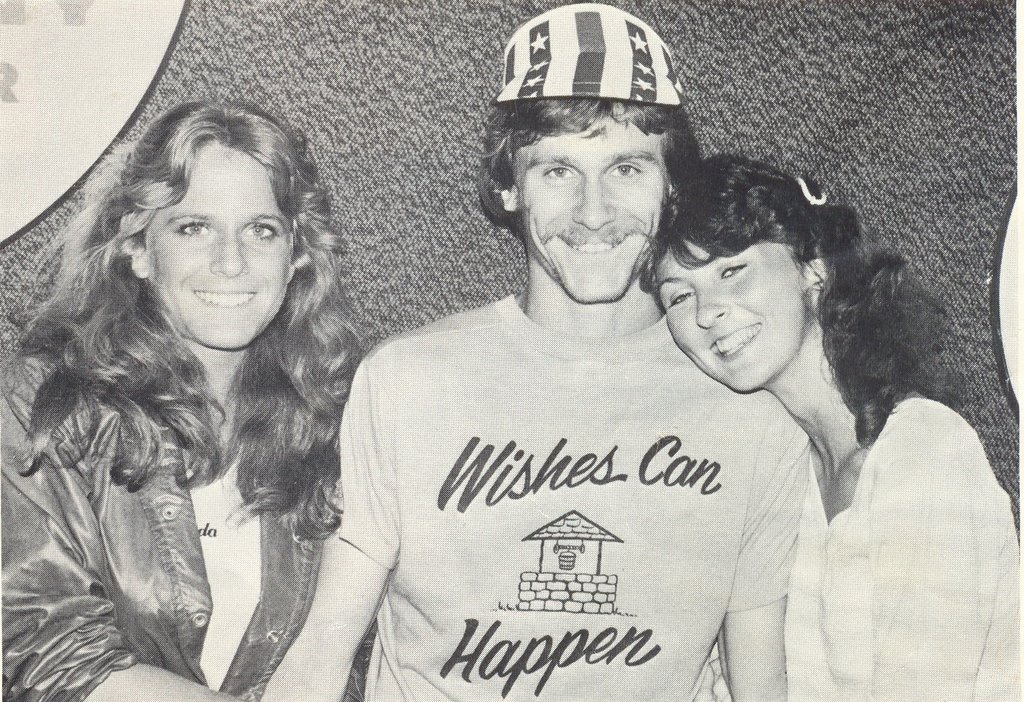
(I talked several people into sponsoring me-- so much money per mile--and I raised over $2000 for an organization that grants wishes to terminally-ill children. Thus, the shirt.)

The trip to me, now, seems like a dream in the night.

And so will this life seem, when I am finally finished with it.

© 2006 by Martin Zender

Wednesday, February 22, 2006

ZENDER-SCHMENDER

Melody and her friend Jamie are doing a half-marathon at the end of April in Nashville. I got talked into it, and will accompany them. I told myself it would be a good getaway. Besides, I’ve never been to a city where they purposely misspell “opera.”

I want to walk the event and finish under three hours. To do that, I will have to maintain a 13.75 minute-per-mile pace. Lately, on my fast Friday walks, I’ve kept up 11 minutes a mile, give or take ten seconds. But that’s for three and a quarter miles only. I will feel primed for Music City success when I’m able to do eight miles at a thirteen and a half minute pace. I could probably do it today with help from my favorite elixir: Gatorade.

The girls did a seven-mile walk/run two days ago, and were tired. Melody told Jamie about my 62-mile walk/run in 1982 from Philadelphia to Atlantic City. The distance sounded so fantastic to Melody as she related it to her friend that she began doubting the distance. Jamie herself thought it a piece of science fiction. So Melody came home and asked me.

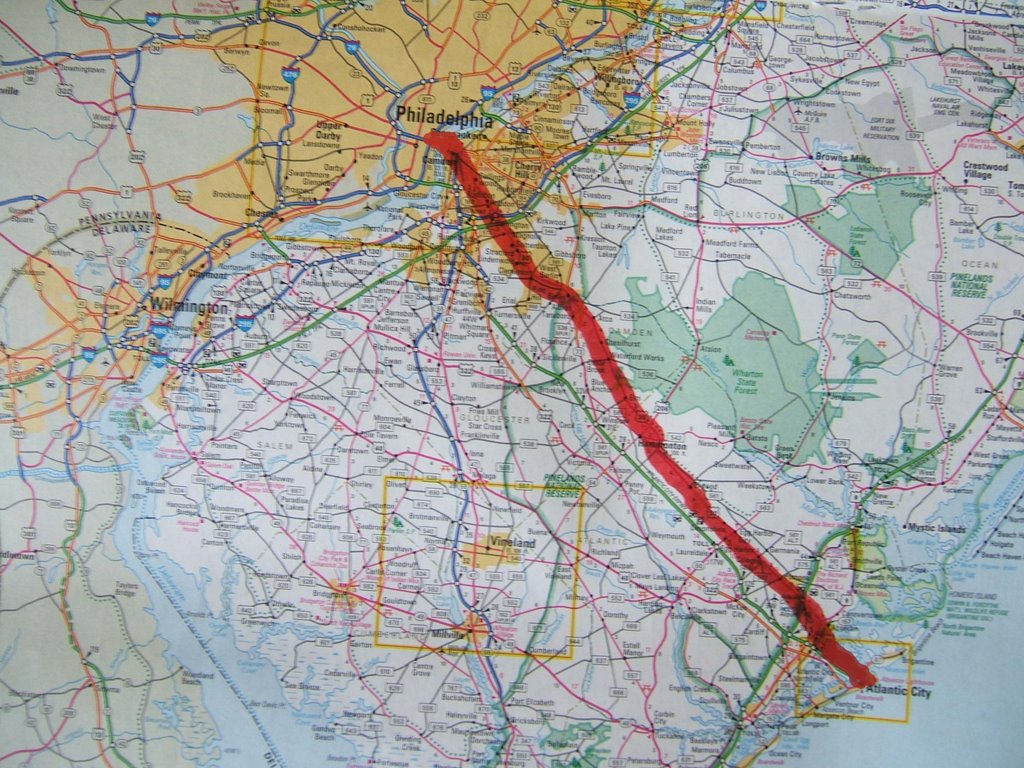
It seemed like sci-fi to me, too. Who was that alien of ’82 who tried everything and feared nothing? Yet I confirmed everyone’s worst fears. So Melody called Jamie and said, “Yep. He did 62 miles, all right. He just showed me his route on the map.”

I was flattered by the sudden fuss. Now Jamie is in awe of me. She does not care a whit that I am a writer of books. That the world’s most outspoken Bible scholar lives down the road from her elicits but a yawn. It’s Zender-Schmender, to her. But twenty-two years ago I did something physical that she now appreciates the difficulty of, and today it’s—Way to go, Martin!

Jamie is a Christian who enjoys the socially accepted end of the spiritual well. People who lower themselves via wooden buckets into that well, toward the secrets of Christ, are oddballs to her. Melody and Jamie do speak of spiritual matters, but always on Jamie’s terms. Melody’s terms would cross the border into Weirdsville, where Jamie is unwilling to be seen.

Two years ago, I talked Jamie into doing the sexy, “And now, here’s Martin” line on my Part-Time Sinner CD. I suppose she regrets it. For sure, she has never heard it. I can write anything I want to about Jamie without fear of reprisal—she never reads me. I gave her one of my books, Flawed by Design, because I thought it would help her through a trial. That was well over a year ago, and I’m still wondering about the book’s impression. Being an optimist, I’m assuming she buried it. But never mind that, for I am a god of forward motion to her now; an idol of self-propulsion.

I like Jamie. She is a good friend to Melody, and a good person. I wonder how she would have fared in first-century Palestine. Even if she hung out at the well with the other women, I suspect that the theology of Jesus would have been way too weird for her. But His walk from Jerusalem to Nazareth—now that would have tickled her bones sure.

© 2006 by Martin Zender

Saturday, February 18, 2006

MONK IN MOTION

INTERESTED BYSTANDERS: Was that you we saw walking out on Route 9 the other day?

MARTIN ZENDER: I suppose it was. Unless it was Admiral Peary.

IB: Were those ski goggles or WWI aviator glasses?

MZ: Ski goggles. They really keep the wind out. I don’t care what I look like.

IB: You needn’t have said that. We thought you might be an Eskimo at first, but we couldn’t fathom why an Eskimo would be out on Route 9. Besides, an Eskimo would have been wearing fur mukluks and not New Balance 763’s. We do credit you for that. How cold was it?
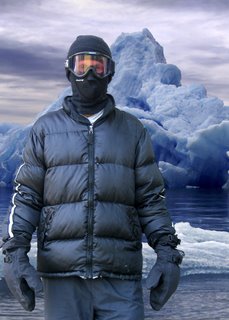
MZ: Twenty-five degrees, but the wind was the problem. It’s really bad on Route 9, especially at the top of the hill on the curve before Base Line Road. There’s no wind block. The wind was at least twenty-five miles per hour that day. The wind chill felt like a hundred below. It’s like an open tundra out there.

IB: ‘Open tundra.’ Isn’t that a redundancy?

MZ: If you’re riding in a car, I suppose it would be.

IB: There now. Are you disparaging our means of transport?

MZ: Not overtly. Cars are a necessary evil. If you can stand to drive one, go ahead. I just hope you get some sort of exercise. I mean, not that you need it.

IB: You are exercising our patience. Does that count?

MZ: The exercising of the patience burns only 35 calories an hour. At that rate, it would take you three months to lose a pound. I’m afraid you’d have to do better than that.

IB: Yes, well—How many miles do you walk a day?

MZ: Eight.

IB: Honestly now.

MZ: I’m walking eight miles a day right now, Monday through Thursday.

IB: How long does that take you?

MZ: About two hours, give or take five minutes. It depends on how many times I stop to tap the bladder.

IB: Tap the bladder! Don’t tell us you are able to manage such a feat in that Eskimo suit of yours.

MZ: Where there’s a will, there’s a way. I carry a liter of Gatorade on my back, is the problem. Plus I drink about nine glasses of water a day. So there are issues.

IB: We have heard quite enough, thank you. So when you are not despoiling the countryside, you average about fifteen minutes a mile.

MZ: That’s right.

IB: So what do you do on Fridays? Collapse?

MZ: Not at all. I do three and a quarter miles of speedwork.

IB: You mean you actually drive your car?

MZ: No. I walk fast. Last week, I averaged 10.78 minutes a mile.

IB: People don’t walk that fast from a fire. At that pace, you may as well be running.

MZ: I used to run—all the time.

IB: I suppose we’re going to hear about it.

MZ: I started running in 1972. I remember watching the great miler Jim Ryun in a track and field event on television. I got inspired and did ten laps around my house when the next commercial came on. It was pitch dark out, about ten o’clock at night. I was probably wearing high-top Converses. My parents thought I was crazy.

IB: Your parents were wise.
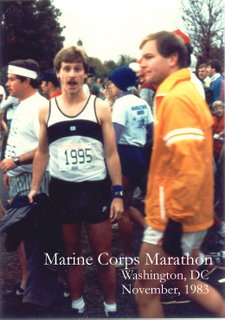
MZ: I did my first marathon in 1980. I would end up doing four more. My best time for the 26.2 miles was a 3:06. But I decided I needed to do longer distances.

IB: All right now, hold on. Excuse us for asking this nonsense question, but—twenty-six miles was not long enough for you?

MZ: No. I wanted to do journey runs. I wanted to run over the curvature of the earth.

IB: Why?

MZ: Because it was there. I’m always striving to whittle life down; I want basics; I want essences. I want to live fit and simply. Lots of things conspire against that in this world, but running seemed so pure to me; pure travel, just the human body and the earth. And maybe a box of Granola bars. So I wanted to do more of it. I wanted to experience where such simple motion could take me.

IB: And so you put this madness to the test?

MZ: You bet. I did forty miles around my city, in one day. Then I did a two-day, seventy-five mile run. Then I did a one-day, fifty-four miler. Then I did a sixty-three mile run/walk from Philadelphia to Atlantic City, across the state of New Jersey. That was in 1982.

IB: Sixty-three miles in one day?

MZ: That’s the farthest I’ve ever gone on foot in a day. But I’d discovered the secret of mixing walking with running. I would run fifteen minutes, walk five, run fifteen minutes, walk five. I just kept doing that from four a.m. until nine-thirty at night.

IB: Isn’t walking cheating?

MZ: Not if they’re aren’t any rules.

IB: Were you alone on these adventures?

MZ: Yes.

IB: Ah. We thought so. So we are correct in surmising that you are some radical, ascetic, monk-in-motion.

MZ: Hm. Well…yes, I guess. Thank you. It’s not altogether true, but it would make a great bumper sticker.

IB: If you had a car!

MZ: You got me on that one.

IB: Back to your mad schedule of present. On Saturdays you…

MZ: Rest.

IB: God be praised! Amazing! You actually sit down! Oh, hallelujah. You are a Sabbath keeper, then.

MZ: Well, no. Saturday just happens to be the first day of the weekend when everyone is home. We just hang around because the kids are home from school, and Melody is off from work. She’s a secretary at the school.

IB: A secretary. Thank the Lord there is at least one normal person in your family. Tell us about Sundays. On Sundays you go to church, obviously, since we hear from so many that you are a man of God.

MZ: Well, no. I walk nine miles on Sunday. But I’m trying to build up to eighteen.

IB: The devil you are! Ignoring for the moment that you are an apostate of some strange and singular variety, may we ask why you—or anyone—would want to build up to eighteen miles of walking on the Christian Holy Day of Obligation?

MZ: I’m sort of training for a walk to Pittsburgh.

IB: Oh. Of course. Well, why didn’t we think of it? We should have know it, from all you have said. Pardon our inexcusable daftness on this. It is a most natural course for you, to walk to Pittsburgh. We are tempted to ask—why Pittsburgh? But please do not say. Because of course we know that the answer will be…

MZ: Because it’s there. Plus, it’ll be a five to six day journey, depending on whether I want to do twenty-five or thirty miles a day. I’ve never done more than a two-day trip on foot, so I’m excited at the prospect of this.

IB: Oh, yes, well, who wouldn’t be? But why don’t you just run to Pittsburgh? You were so crazy about running. You disobeyed your parents because of it, and brought them grief. We think you owe it to them to run to Pittsburgh.

MZ: I don’t run anymore.

IB: What? Are you out of Granola bars? Gatorade? Some other foul product? Do tell.

MZ: Actually, I just got tired of it. It got to be too hard. Walking is more relaxing. It’s easier.

IB: Easier! Why, that should be enough to damn it for a person such as yourself. Are you turning over a new leaf?

MZ: My body’s telling me to walk. Besides, it’s even more basic than running. It used to be the main mode of transport in this world. The car is a Johnny-come-lately, you know. I’ve discovered that a Biblical day’s journey was between twenty and twenty-five miles a day.

IB: So?

MZ: So, people used to regularly walk distances like that. It was an ordinary thing back then to be able to walk twenty miles a day. When grandma said she’d be walking from Jerusalem to Jericho, nobody thought anything of it. It was no big deal. They said, “See ya, Grandma!” It was a common state of fitness, to be able to do that. These days, people don’t even want to park on the outskirts of a Wal-Mart parking lot. It’s too far. They’ll drive forty laps around the lot in their cars, just to get fifty yards closer. It’s pathetic.
IB: Oh, have some sympathy. People are old, you know.

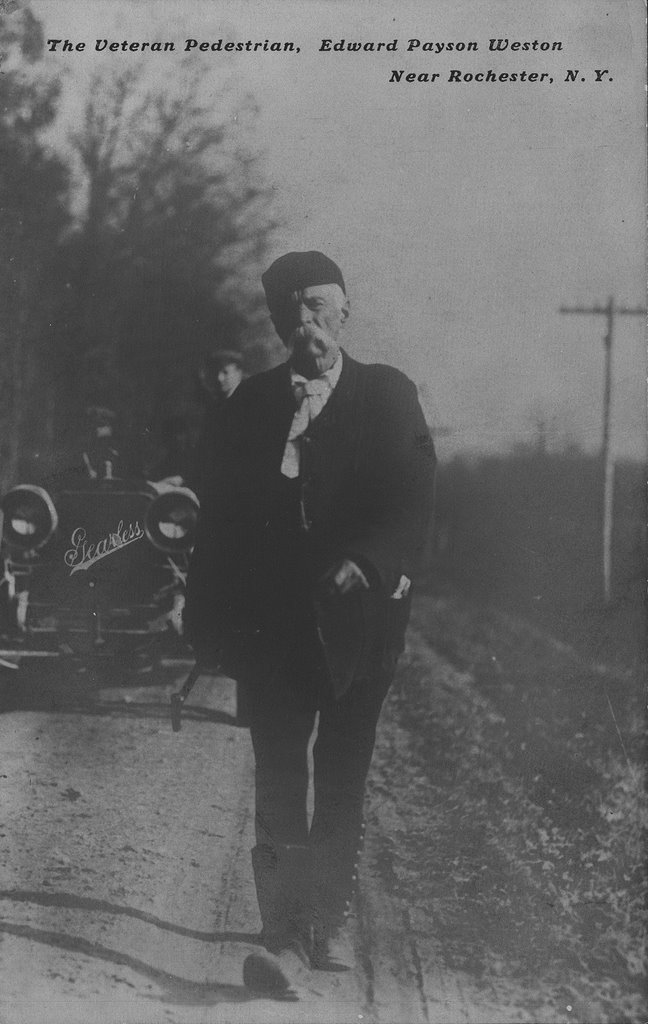
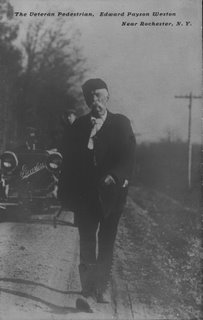
MZ: Well, they wouldn’t get old if they’d get out and exercise. Ever hear of a guy named Edward Payson Weston? He was a famous pedestrian of the late 1800’s, and he walked across the United States at the age of seventy-one. Seventy-one. And he averaged forty miles a day!

IB: Another radical, ascetic, monk-in-motion, no doubt.

MZ: Not really. Just a man who valued exercise and fresh air. In fact, the more I think about it, this radical, ascetic, monk-in-motion label no longer describes me. Maybe I used to be that way, but I’m not anymore. I just want to be normal.

IB: Glory be. You call walking to Pittsburgh normal?

MZ: It would have been normal a hundred and fifty years ago. Nowadays, normal is weird and weird is normal. If you ask me, it’s weird to drive around a Wal-Mart parking lot for fifteen minutes looking for a spot next to the handicapped space.

IB: Hm. Well…perhaps you’ve made your first point of the day. But—say, where are you off to in such a hurry?

MZ: Excuse me, but I’ve got to use the restroom.

© 2006 by Martin Zender

Thursday, February 16, 2006

TENDING TO MY DISCHOCOLATED WIFE

I called Melody off sick today from her job. What a terrible week Melody is having. First her husband gets her nothing for Valentine’s Day, and then a virus invades her fair frame and convinces it to produce ridiculous amounts of histamine. I assure you that Melody would be at work today, performing her usual miracles, were she not talking like a frog. It would not do well, I told her, for her to answer the phone at the school and say, “Ribbit?

“I need Kleenexes,” Melody told me before I headed off to work. “And those vitamin C cough drop things. Ribbit!” Having gotten her nothing for Valentine’s Day, this trip to the grocery was the least I could do. I hopped to the task.

As I stood in line at the grocery store at 8:15 a.m., a strange thing happened. The woman at the cash register told the woman in line ahead of me: “I think I’m getting Alzheimer’s.” She said this on the heels of forgetting the customer’s regular brand of cigarettes. It was not Alzheimer’s, of course, but that her mind was overloaded with grocery facts. She is also the owner of the store, and there must be no end to the details she must remember: How much does a can of garbanzo beans cost—per thirty-can carton? When will I have to order more Ajax? Will our twelve-packs of Lincoln-shaped marshmallow heads get here before President’s Day? Why does mold grow on all of our grapes?

At this juncture, the woman in line ahead of me said, “You just need a vacation.”

The storeowner responded, “Well, I’m going to a food vendor’s convention next weekend. I’m going to be buying hams.”

I was so taken aback that I almost reached for an impulse item. The woman in front of me said, “Well, that’s no vacation. That’s work.” Amen, sister. Preach it for both of us. A grocer going to a food vendor’s convention would be like a bullfighter going to church: business as usual.

I should have let this intelligent customer make our mutual point, paid for my Kleenexes and vitamin C cough drops, and left to attend to my dischocolated wife. But it entered my head how to make the food convention fun. I saw mental pictures of how to accomplish it. I can’t help what I think of. I can usually help saying it, but I thought my comments would enlighten and edify this gathering. So I said, “The only thing that might make a food convention fun is if there was a food fight.”

I realized then that I should have slapped myself in the head with an impulse item. I stared at the black conveyer belt thing, waiting for someone to laugh. I stared at the ingredients of the cough drops, waiting for someone to laugh. I noticed that there were 200 Kleenexes inside the box I was preparing to purchase, waiting for someone to laugh. For a reason I will never understand, I gained courage from the silence. My vision of the food fight at the convention had budded, and I was not even at the flower shop. So I looked up into the owner’s eyes and said, “I mean, I would love to throw a ham. Wouldn’t you? Imagine that. Throwing a ham. Try to imagine actually heaving it at someone. I’d throw it thawed, of course. I wouldn’t want to throw a frozen ham. Can you imagine getting hit on the head by a frozen ham?”

It was so quiet after this that, for a moment, I thought I might be at the library. But I looked around and noticed that there were no books. There were only impulse items like little pencil sharpeners, packs of bubble gum, and issues of TV Guide. I knew it was the grocery store then, because patrons at the library are discouraged both from chewing gum and knowing ahead of time what will be on television.

Someone had come into line behind me—another woman. She had heard my ham soliloquy. I looked to her for comfort, but she was staring at a rack of beef jerky, pretending to read the ingredients.

To me, throwing hams is a healthy antidote to the rotish observance of Hallmark Holidays. My advice to everyone is: Do the unexpected. Be unpredictable, and good things will come to you.

You can always apologize to everyone later.

© 2006 by Martin Zender

Wednesday, February 15, 2006

HALLMARK HOLIDAYS

Someone e-mailed me this morning and asked me what I got Melody for Valentine’s Day yesterday. This was my answer:

I am an eschewer of Hallmark Holidays. I know that Hallmark did not invent Valentine’s Day, but it has become so closely associated with it that the firm has hired Cupid as its East Coast Distributor. As for lauding Melody with such things as flowers and chocolates, I avoid predictability whenever possible. I am a man of spontaneous combustion.

On the way home from work yesterday, I saw a guy emerging from the flower shop with a vasefull of product. He looked so sheepish. He really did resemble a sheep—a sheep carrying a bottle of roses. Getting one’s wife flowers on Valentine’s Day is like going to church on Christmas and Easter. It’s like saying to God, “Okay, God. I’m doing what I’m supposed to do here, so please try not to send me to hell.”

I knew the guy, so I gave him a knowing wave. He yelled across the street, “Marriage insurance!” I had to laugh. Fire insurance, marriage insurance—what’s the difference?

You will never find me at the flower shop on February 14, or at the bar on St. Patrick’s Day, or in Selma on the Day of Martin Luther King. I’m more likely to visit the florist on Wednesday, April 12. Why then? What does that day mean? It means nothing. The day does not exist on Hallmark’s hallowed calendar, and this is why I favor it. It is for this very reason that I may be there. April 12, 2006 is an arbitrary day. It’s a day on which spontaneous love for my wife could very well spill from my heart and land on her desk at work in the form of a professionally arranged bouquet. But now I’m doubting it. Because now that I’ve announced this day as a possible contender for my spilling heart, I am forced by my own doctrine to avoid it. Notice to one and all: I, Martin Zender, will not be seen walking from the local florist with a vasefull of product on Wednesday, the twelfth of April, 2006.

I may, however, venture surreptitiously to Selma.

© 2006 by Martin Zender

Monday, February 13, 2006

DREAMING IN COLOR

I had an intriguing dream the other night that I did not remember until the following afternoon when I was interrupted at the corner of Snyder and Milbourne Roads by a funeral procession.

“That figures,” I mumbled. I couldn’t turn left because the hearse was coming on, followed by seven or eight hundred cars (or so it seemed) with their lights on and the requisite purple flags suction-cupped to their roofs and hoods.

Oh, woeful and wretched man am I. This procession, at first, was but an impediment to my forward progress. I was inconvenienced so that I could not immediately turn left and hurry back to work after lunch. This, while some poor and lunchless person lay prostrate in a box at the back of the hearse, making no forward progress whatsoever. And here was the family, in mourning.

I came to my senses and shifted into “park.” Now I had to watch it; God said, Watch this.

My radio does not work, praise Him. The February sky hangs low and gray this day, as it does on most days here in my state. Lukewarm air comes through my venting system and my car rumbles because God has damned the exhaust system. To His credit, He has granted 235,000 miles of miraculous travel to this machine, my machine. It used to belong to my earthly father, who died himself two years ago and no longer suffers upon this vale of tears.

I could see the entrance to the cemetery from my stop-sign vantage point. The cars pulled so slowly into the place; right turn, right turn, right turn; outside wheels obeying inside wheels; wheels, wheels, scrunching against the pavement and leather-gloved palms. I stared at the wheels and their slower-than-death turns.

Steering wheels; tire wheels; the wheel itself, invented thousands of years ago and still the workhorse of this “advanced” age. By now we ought to be visiting wheels in museums, but instead we surround them with balloons and flapping plastic pennants. Wheels should humiliate us, but instead they excite us. We decorate them with spoked covers and kick them. If they maintain their constitution, we delight in them and incur debt because of them. We take care to polish them. We tell our friends we have got “a new set of wheels.” We “wheeled and deal.” We have become “big wheels.” Wheels are as humiliating as crutches and the rubber-bottomed boots used for casts, but nobody gets it. The race is hobbled and no one notices. As I watched the cars, I though of travel in the hereafter: wheels will be conspicuously absent. But here beneath the modern February sky, I watched the deceased suffer the final humiliation of mortal flesh: transported to the grave by means of the wheel.

At that precise moment, I remembered my dream.

Take this lightly. My dreams may be inspired by the wheat germ I sprinkle on my oatmeal before bed. What I am about to relate to you may not even have been a dream, but a mental picture in the seam between consciousness and sleep. It was real enough to me, though, and it thrilled me.

In the dream I saw colors, but not colors as we know them. You may think that an apple is red and a leaf is green, but what we call “red” and “green” are poor substitutes for the real things. The real things have names that we don’t even know. Red may actually be splerdon, and green florn. What we see now are baby colors; primitive hues; dialed-down driplight. The colors of my dream were mature, ripened, bursting. It was as if God had suddenly cleaned my dirty windshield with a miraculous blue fluid. I saw an apple tree that was so beautiful it made a noise. The colors made sound, so pure were they. They attacked me in a pleasant way and attached themselves to my eyes. A simple close-up of an apple made my breath halt. Even the air had color; even the air made a noise. I realized then that, even while seeing, I had for my whole life been blind. In this dream, God removed the veil and I saw glory.

I knew then the trouble God went to to mute the glory of His creation. He works hard, daily, to keep it under wraps. He must not reveal it before the time. It is as if God has a glory knob and has turned it far left to the lowest notch and nailed it there. But on this occasion and in this seam of unconsciousness, He turned the glory dial up one notch to grant me a glimpse at the real; this reality; these colors; this air.

It was brief, but momentous. My initial reactions was: God! I see now why evil had to come. It’s worth it! This was my instant response. All evil fell away to nothing except for its bare-bones purpose: to reveal glory. I knew in a moment that every evil was justified. Every pain fell into place at my first glimpse of the real world. And God may well have said: You justify me because of this? Greater things than these shall you be seeing!

He had barely nudged the glory dial and I was ready to proclaim Him “The Pure Genius, God! Father of all! Justifier of Everything!”

What a sucker I am for glory.

For now, I endure the trains of death, with accompanying headlights, purple cotton flags, and the endless convoy of wheels. But now I see God behind it all, winking, gripping the glory knob with His right hand, smiling so pregnantly toward my tired face.

© 2006 by Martin Zender

Thursday, February 09, 2006

SOCK HELL

I am capable in some areas of living, in others—no. For instance, I am mercilessly incapable in the area of sorting socks.

I can distinguish Melody’s socks from those of my sons because Melody’s socks have a feminine look and feel. The best news for me is that Melody wears a certain variety of black, lacy sock. I know the socks are hers; they better be. I enjoy folding Melody’s socks; I linger over them. I do not do the same over the socks of my sons. I love my sons, but I am afraid of their socks and avoid them. All of my sons’ socks look alike; I cannot distinguish them.

It is an experience of evil that Elohim has given to the sons of humanity, to humble them by it. –Ecclesiastes 1:13.

Darn those socks! There are too many of them. Each of my sons has two feet, making six feet in all. Each foot has a sock, and each sock looks like all the others. To make matters worse, one size appears to fit all. Compound this with the fact that my sons change their socks every day (a habit they learned from their mother), and you can appreciate my dilemma. I am not a patient man, at least not when it comes to sorting socks. I tried to be patient one day last month. I attempted to sort the socks that day; I made an honest effort. But I ended up throwing the socks against the wall and talking loudly to them. The static electricity made the socks stick to the wall, and so I cursed the stuck socks; I cursed them verbally where they vertically lay. I wondered if it was worth it, this sock-sorting business. In a short time, I decided it wasn’t. I was willing to serve Melody, but was unwilling to lose my mind over underwear made for shoes. It was at this time that I devised Plan B.

Plan B, stated flatly, is this: GIVE UP. This strategy has worked wonders for me. I have used it several other times in life, to good result. So I began gathering up the socks and plopping them on the dryer in a pile, much like a sock hodge-podge—a sock-podge. “It’s a free-for-all,” I told my sons. “A sock-podge. It’s a sock give-away. On top of the dryer, you will encounter sock hell. If, by some mad gift of God, you are able to distinguish what is yours from that of your brother, then do so. Now!

Melody did not like this, at first. She tried to persuade me that I was capable of sorting the socks.

“I am incapable,” I corrected her.

“Try it,” Melody said.

“Oh, Melody. I have tried.”

“What happened?” Melody asked.

“I failed miserably.”

Melody asked if I could demonstrate my conception of “failed miserably.” Being more than happy to, I grabbed a handful of socks, threw them against the wall, then cursed them where they vertically lay.

Melody was impressed. “Does this happen every time?” she asked.

“I don’t know,” I said, “I’ve only tried it once. And once is all I intend to try it.”

So now the socks somehow disappear from the top of the dryer, and everyone is wearing clean socks. I don’t know how this happens, and I don’t care.

I only care that it happens, and that I have nothing whatsoever to do with it.

© 2006 by Martin Zender

Sunday, January 15, 2006

PEOPLE ARE HUMBLED WHEN THEIR FINGERS FREEZE OFF

I love to see, when leaves
depart,
The clear anatomy arrive,
Winter, the paragon of art,
That kills all forms of life and
feeling
Save what is pure and will survive.

—Roy Campbell


There is a pomposity to summertime that winter forbids. Summer permits the Beach Boys, squealing tires, hot sliding boards, and rolled-up sleeves. Winter brings cares, caution and the clutching of wraps to the breast.

Winter humbles us, and that’s what I like about it. It does to our character what it does to trees. When ferocious, winter strips bark and stops sap. When cruelly overstaying its welcome, it makes human beings groan and wish for Elsewhere.

Winter is a mirror of the real world; it draws from men the ingenuity to surmount hardship. When the world is cold, a man builds a fire. When the world is tempestuous, a man builds a roof. When the world is so terrible that a man’s skin begins to die, he finally seeks God.

God lives on both sides of a storm window. He inhabits both the crystalline snowflake and the embers of a cozy, Christmas fire. He inhabits the ice dagger snapping from the eaves and the robe belt clinched tight against the absence of heat.

Winter is contrast between sides of a storm window. The storm is without, peace within. The cold is without, warmth within. The wind is without, within are gentle heat-puffs rising from ducts or stovetops. This contrast is as delicious as man and woman, work and rest, laughter and tear.

Here is one way to enjoy it:

The outside of your down sleeping bag should be forest green, the inside silver. Sleep naked inside the bag on cold, winter nights. The bag should be of goose down so that the down traps the air, warms it, and keeps your skin the temperature of palm trees while the outside world quivers and quakes.

Yesterday you wore heavy bedclothes, but today you test comfort against nothing but the feathers of geese. The silver lining is a cirrus cloud that the goose flies through, and the long zipper is the Deity’s man-made wedge against a much crueler world.

Upon waking, you need only a reclining chair and a book. Do not move except at the behest of gravity; this must include the sinking of your heels into the foot part of the chair. Let the book capture you to the point that the world outside the storm window ceases to exist. At this juncture, cars, if they come, will not come, and people, if they chatter, will say no words.

There is a cup of coffee near you, billowing smoke. The smoke, if you watch it, twirls in the cup as it exits, then disappears inside a lamp shade. If you read a fine sentence, savor the words with a small mouthful of the coffee. When the words have exhausted their usefulness (and not until then), let the coffee slide down your throat and pay attention to what happens when it arrives at your stomach.

Winter is a slender thing. I recommend befriending it. Tomorrow it disappears and someone plugs in the Beach Boys. Tomorrow it disappears, and men build no fires, nor do they contemplate roofs, nor do they seek God. This is because, in the green and the blue and the rose petals of summer, God seems everywhere. This, in turn, is because, in the green and the blue and the rose petals of summer, contrasts disappear.

God dwells most heartily in the snowflake, the ember, the icicle, and the robe. These are the best things, the hard and soft things, the things that draw purpose from the breast, around which, today, we wrap our coats.

© 2006 by Martin Zender

Sunday, January 01, 2006

DATES & CONTENTS

GREETINGS! Welcome to Zenderville. If you are new in town, read these offerings chronologically. Things will make a little more sense to you that way. The events will not only be chrono, but they will be logical as well. And don't forget to break the speed limit! Martin

1/15/2006
PEOPLE ARE HUMBLED WHEN THEIR FINGERS FREEZE OFF

2/09/2006
SOCK HELL

2/13/2006
DREAMING IN COLOR

2/15/2006
HALLMARK HOLIDAYS

2/16/2006
TENDING TO MY DISCHOCOLATED WIFE

2/18/2006
MONK IN MOTION

2/22/2006
ZENDER-SCHMENDER

2/23/2006
PHILADELPHIA FREEDOM, 1982

2/26/2006
MELODY’S BIRTHDAY

3/02/2006
BLUE HOUR RESCUE

3/04/2006
THAT MAN IN HIS NYLON PRESCRIPTION BOTTLE

3/06/2006
VENTI EXPERIENCES AT THE BOOKSTORE

3/07/2006
FROM THE TREES SHALL COME MY HELP

3/13/2006
TOWN JUNK

3/14/2006
THE DEATH OF HERB DIRKS

3/15/2006
PASTOR DISASTER

3/16/2006
IN LOVE WITH MYSELF

3/17/2006
ST. PATRICK’S DUH

3/18/2006
ROAD MAN

3/20/2006
MELODY WHITE VS. MOE & COMPANY

3/21/2006
DAY OF BITTER COMPLAINT

3/22/2006
NPR ANGEL

3/27/2006
HOT SOFT CHEESE ROLLS

3/28/2006
NUCLEAR WAR AND THE BIKINI CURE MALE DEPRESSION

3/29/2006
EFFECTIVE CURES FOR DEPRESSED WOMEN

3/30/2006
SHAMEFUL WEALTH

4/01/2006
CURLICUES OF A WICKED EON

4/04/2006
WITH A BUTLER ON THE LADDER AND A PHIPPS IN HAIR

4/05/2006
A BROTHERHOOD OF CREEPIES

4/08/2006
LAST LAUGH IN AMISH COUNTRY

4/11/2006
TO BE A DUCK

4/13/2006
TENDER BABY IN A NEW WOMB: THE HENNESSY ARRIVES

4/14/2006
PRETEND YOU’RE UNCLOVEN

4/18/2006
SLEEPING APART

4/21/2006
THE MARTIN ZENDER DRILLING COMPANY

4/28/2006
MELODY GOES TO NASHVILLE ALONE

4/30/2006
I MISS MELODY

5/01/2006
MELODY RETURNS FROM NASHVILLE

5/04/2006
LONG COOL WOMAN AIN’T HEAVY

5/05/2006
HOW TO WRITE/HOW TO LIVE

5/08/2006
ANTLERS ON A FRICKIN’ MOOSE

5/09/2006
THE FLIGHT OF THE DOOPSIE

5/10/2006
F15718

5/16/2006
JED CLAMPETT OF THE NEW WORLD ORDER

5/22/2006
GOLD IN THE CAVE WALL