Wednesday, May 10, 2006

F15718

You will never guess what happened to me yesterday afternoon. Given a hundred years you would still speculate wide of it, short of it, everywhere but on it. Were you to eat three helpings of salmon and chase it with broccoli and green tea, the goings-on of moi on the afternoon of yesterday would ne’er come nigh your tent.

I fell asleep on my walk.

Well, not exactly on my walk, but during it. You see, I usually sit down for two and a half minutes at the seven mile mark of my daily round. This brief respite makes the final mile back to my office less of a strain. The two and a half minute sit is long enough to leave me refreshed and ready to go stale again.
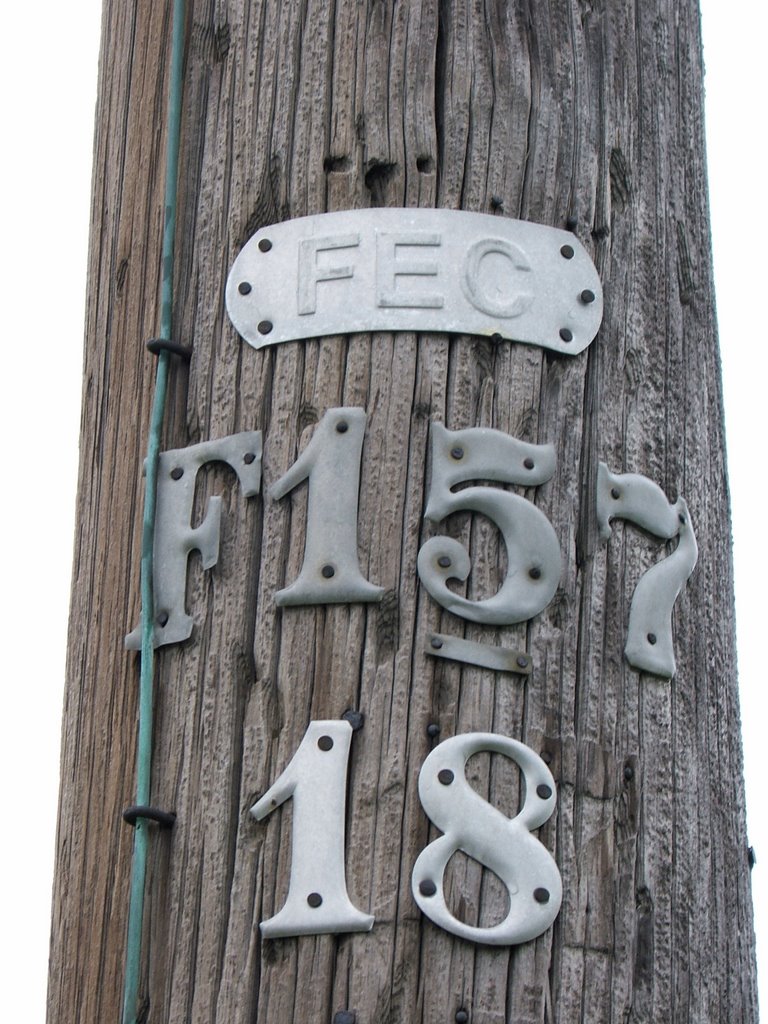
I have a favorite telephone pole (F15718) that I think fondly of and lean back against as I bring my knees to my chin to enjoy the sensation of not walking. The pole is on an agreeable, grassy little hump. The thing yesterday afternoon was that the weather came fair and the winds spindly, so I closed my eyes. Next thing I knew, two cars passed the pole simultaneously from opposite directions, creating enough of a whoosh to startle me into consciousness. It was then that I realized I’d been asleep.

I don’t wear a watch, so I looked at the sky and unsheathed my sextant to make sure I hadn’t accidentally slept for, say, five hours. It was not like me to fall asleep at all in the middle of the day (except for lately), but I thought I’d check the sky anyway. I didn’t want to have missed supper. The sky looked just the same; the sun was where it was supposed to be. That relieved me at first, but then introduced a troubling thought: was it possible that I had slept for 24 hours? What if I had just spent the night with my back against F15718?

Well, ha-ha, of course I knew that was impossible because I didn’t remember brushing my teeth. Besides, I looked down at myself and noticed that all my clothes were still on. Plus, Melody had not kissed me. Plus, I had not said goodnight to the kids. I was relieved for all of this, to say the least.

I once fell asleep while riding a bicycle. So momentous was the occasion that I remember the year: 1991. And the season: winter. I had set for myself the goal of riding my bicycle the 23 mile round trip to my post office job on as many days as possible between October of 1991 and March of 1992. In other words, through the winter. Any idiot could do it through the summer, I thought. At least I think I thought.

The problem (one of the many problems) was that my job necessitated my presence at 5:30 a.m., and the post office lay 11.4 miles to the west. This necessitated my rising at 3:20, eating as much food as possible, and leaving the house at twenty past four. I remember my breakfast in those days: one large bowl of Malt-O-Meal, two huge blobs of grape jelly supported by two pieces of toast, a Slimfast breakfast shake, orange juice and a cup of coffee. Melody (such a good wife then, and always) would get up with me, help me burp, and send me down the road with a cheery, “You’re nuts.”

For some reason, I loved it. I loved the dark and the cold. I loved that no one else was around. I trumped the world in this way. I blinded the dark and the cold with science. I blinded it with a high-tech lamp (NightSun) clamped to my handlebars, a windshield (not kidding, manufactured by the Zzipper Fairing Company), electronic foot warmers (Hotronic), down mittens that resembled hockey goalie gloves, a black Lycra face covering, and ski goggles (Scott). I looked like a citizen of Pluto. I pedaled like a citizen of Pluto, just to make heat. No sun in my universe shone or even suggested the phenomenon. I was usually so awake it was ridiculous. But on one particular morning, I wasn’t.
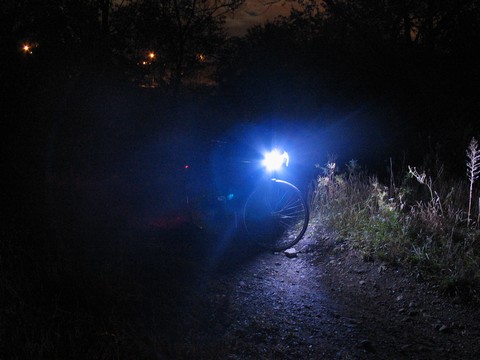
I was pedaling up a hill one morning (up a hill, for God’s sake) with the snow flying and my nose running and my legs pumping as usual, and it just happened. Nitey-nite. Next thing I knew, I was in the ditch; didn’t remember going there; never would have steered there purposely; never favored snowy sidegrass as a premier route choice. My adrenal glands squirted their protective juices and I remained upright and heaved myself back to the pavement. I was awake for sure now. I related my adventure to my work crew while missorting mail. I was legend already, but this cemented it. Another time I almost hit a deer, and this was commemorated with a plaque next to the postal coffee pot.

Yesterday was weird. This whole two or three weeks has been weird. I can never sleep during the day. I sometimes try, but hardly ever can. I have trouble shutting down my mind. I never tell you any of this. You don’t know the price I pay for being me. You don’t know what my brain does to me. It hardly ever considers my feelings. It lives a Bohemian lifestyle that I, myself, could not possibly bear. It tortures me, though I have never been anything but kind to it. Perhaps you do not know what it is like to always be at work. If you do, forgive my presumption. Writers never clock out. A writer is at work even when he or she is looking out a window, or leaning against a pole, or dumping the sandy residue of cat waste. There is no stopping the onslaught of information and the brain’s innate need to record it—my brain, anyway. But I got back from my walk yesterday, worked some more (yes, I do work; I swear I do; I think and read and write and talk into my microphone while staring at you through my wall [ZenderTalk], and my mind never gives me a break, but these are not the lowlights of my day; I relate the lowlights for the thrill of exposure and the potting of my plant in the universal peat; everyone works, but not everyone accidentally sleeps against a telephone pole or flushes out a deer in the middle of the night with the high beam of a NightSun bicycle light, so that’s why I relate these. I also saw a dead dog yesterday on Route 9, a little dog I greatly admired; he walked with a larger, older dog; they barked at me halfheartedly but never bothered me because they were too busy on the farm; they were the Bobsie Twins, Laurel and Hardy, I loved them; the little one was so sweet walking behind and trying to keep up with Old Bess, or Old Roy, or whatever the older one’s name might be, but there was this little one alongside him always, or sleeping next to him, or looking up at him, his big buddy, but now here on the side of the road away from me and away from his older friend in swipes of blood—unfair blood—I had to hope it was not him, but his little head was too brown and the little body was too white and blotched in too soft brown for it not to be him, so I choked back tears and looked ahead to something and walked on faster and breathed in the sunshine, because you know what death does to me and how much I love animals and how rarely the sun shines here; I knew that the owner of the farmhouse would come and get him because the owner has a young boy [I hope the lad is sensitive, but not overly so like I am]; I could not go get the dog myself or anything like that; I just could not do it; I wonder now if the older dog realizes it yet; I could only turn away from what used to be my friend and walk forward pretending not to see him, pretending that life goes on, pretending that the eon has already ended), and then I laid down (or lay or lie, I never know which; I always have to look it up; I never learn; I never want to learn because the rules are so ridiculous) on my sofa when I got back and took my pants off and you’ll never guess what happened next. You would never guess how I found relief then. In a million years you will have ventured and ventured and reckoned your head off reeling off a million guesses without ever nearing the truth.

I took a nap.

I was so happy when my mom called later yesterday to tell me that the pollen count has been astronomically high due to the non-severity of this past winter. Wow. So that’s been my stupid problem. So at least now I know that I’m not dying. Ah. It’s life that’s killing me.

All I need then, is a large jar of local honey and a big spoon. Forget the dumb bees from Argentina. California bees do me no practical good. It’s the local bees that go out and gather all the specific pollens (the local stuff that is killing my mom and me) that torment local sufferers. And they carry it on their little bee feet to whatever hive they call home. Then they digest the pollens with their inner syrups, regurgitate it as a sort of vaccinative elixir (called “honey”), surrender it to the bee man, witness the man’s wife—through the translucent hive walls—glean their nectar through plastic nipples in jars shaped like bears—or, better, in fat glass jars dubbed “Mason”—for the innoculative rescue of sufferers like me and she who bore me.

All this will happen, God willing, tomorrow, if I can scrape up seven dollars left over from the price of gasoline.

© 2006 by Martin Zender

Tuesday, May 09, 2006

THE FLIGHT OF THE DOOPSIE

If death is such a bad thing, then why did Jesus—in the case of Lazarus—compare it to sleep, and why does it feel so good to turn out the lights at night and feel the soft covers come up over one’s naked body, and feel the Reaper snuggling up against one’s chin?

It is 9:30 a.m. and I have just eaten my third 3 Musketeers bar. That’s a total of nine musketeers in less than five minutes. Death is nigh my tent, but I am pleased of it. My fingertips are gay in the archaic sense because they are shaking like paint mixers. I could eat three more 3 Musketeer bars—but halt. While nine musketeers may be company, eighteen would be a crowd, a nougat-filled crowd. I have possibly just now entered musketeer heaven (as I write) because I am feeling quite good about m-m-myself. (M-m-my brain is tricking me. Sombody, p-p-please help me.) My bloodstream is licking its chops. This good feeling will go away in about ten minutes, and I will feel like shit. Is it a good trade-off? You bet it is.

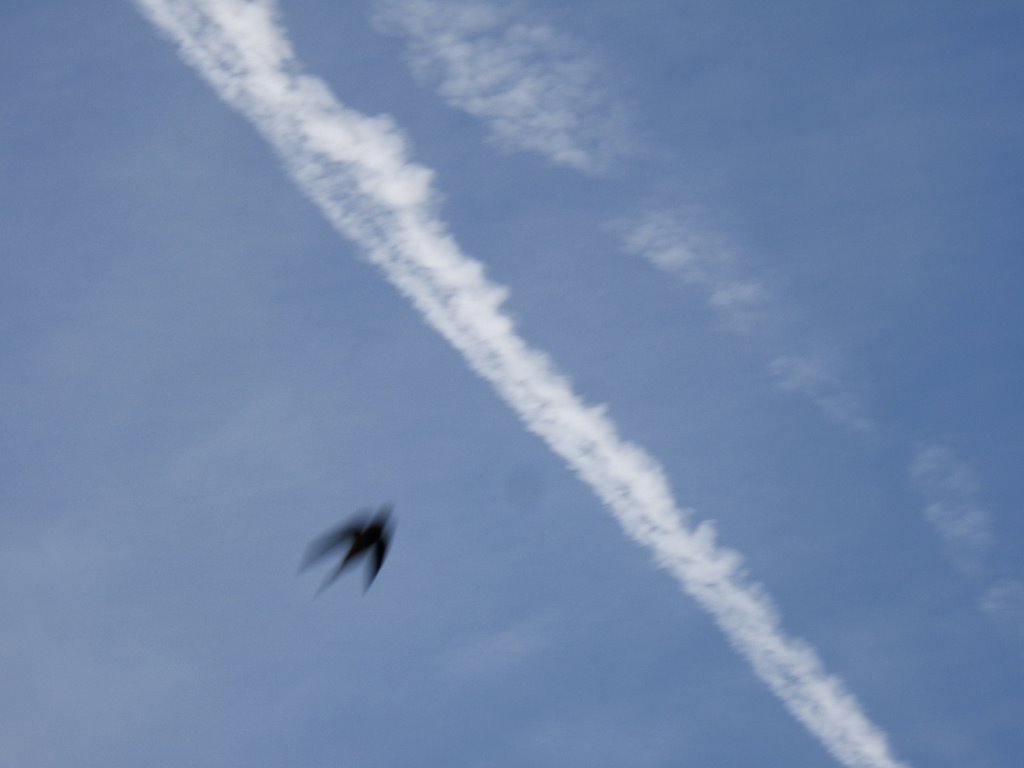
I did my eight-mile walk yesterday. The weather was favorable and I was not eaten by a dog. I just sort of walked. I didn’t do anything else, really. I did sip my fruit punch Gatorade through my blue bite tube. I may have had one or two thoughts. No, wait. I just remembered that I was on Base Line Road heading due east when a high-flying bird took a mid-air doopsie. I saw the blob of white doopsie emerge and I visually followed it all the way to the ground. I have for years seen the results of avian digestion, but never the process. The sky was so blue and the field was so green and the doopsie was so white that my eyes got so big. It took the doopsie nearly four seconds to hit the ground.

This doopsie reminded me of the time I saw a space shuttle launch and watched the two white solid rocket boosters jettison just short of space. The boosters were just tiny white dots away up there near space and I had to squint and shield my eyes from the Melbourne, Florida sun to even barely scratch out the pencil-shaped side rockets, which to me looked like tooth-shaped dots. (Imagine being where the boosters were. Imagine being close enough to them to rub a flat palm against their great sides as they whirled and twirled and flipped end over end through the air over the ocean before their chutes popped. [What violence!] Imagine the sound of the air whipping around the boosters and the sun reflecting in the leftover heat of the main shuttle engine—the big red thing. Imagine the size of the boosters and how cool and smooth the shiny ocean-side of the boosters would be to the caress of the open palm, and how far away I looked to those boosters, standing, as I was, in a motel parking lot shielding my eyes from the same sun glinting them.)

Well, it was the same thing with the doopsie.

Birds flew automatically for thousands of years before humans learned to “imitate” them with killer engines and landing gear the size of semi trucks. Men stared at birds out their windows after breakfast and figured that if a being that small with a brain the size of an avocado pit could fly, then so could they. Why, with the proper amount of feathers and a hearty strap or two, they could fly as well as any purple-bellied finch. So the men built wings loaded with feathers and straps loaded with little sizing holes. The men strapped the wings to the tops of their arms and cinched, each, the others’ buckles. Thus the men proceeded to make fools of themselves before their womenfolk and the more discerning neighbors.

All women back then pooh-poohed air travel. For one thing, the women would not fain soil their dresses. For another thing, the women had to clean up from making breakfast for the men. For another thing, the women kept birds as pets and the birds filled them in. Even the birds were smarter than the men, but the women were for sure many IQ points ahead of their penis-wearing counterparts. For another thing, the women foresaw overcrowded coach seating and twelve-hour flights to Sydney. Said one to another over a sink full of earthen pots: “Let us simply invent the minivan.”

I had to live forty-six years before God allowed me a vision of freefalling bird poop. For some reason, I have been mysteriously repeating to myself this week: “Complete life’s work, then die. Complete life’s work, then die.”

Another domino falls, I fain concede, with yesterday’s flight of the doopsie.

© 2006 by Martin Zender

Monday, May 08, 2006

ANTLERS ON A FRICKIN’ MOOSE

I was tired all weekend without knowing why. Yesterday was the first Sunday since January that I stayed home from a long walk. I could not imagine myself walking down the road yesterday. Falling down it, yes; passing out on it, yes; fainting, yes; sleeping in the ditch, yes; getting run over by a truck, yes; walking, no.

I woke up sneezing and sniffing again. In an exasperative fit, I took a dose of Nyquil. That will teach it! I thought. But it taught me. Thirty minutes later, I was back in bed for a two-hour nap.

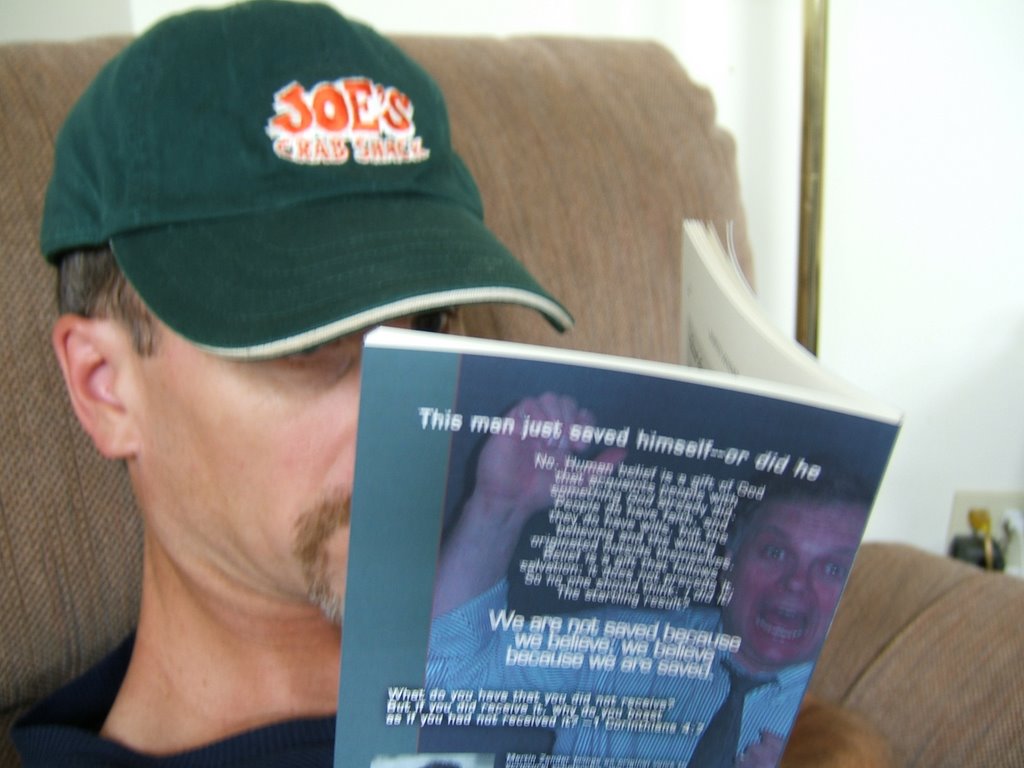
The drug wore off at 1:30, so it was time to proofread the digital text proof of my latest paperback, The Really Bad Thing About Free Will. This book is now at the printers and they are poised to print, but they are awaiting my sovereign approval. So I sat on the sofa to read my own book. I hoped to like it. I hoped to not find any typos in it. But better to find them now than later.

An hour later, I finished. I think this is a fine book. I wonder how I wrote it. There is a mistake space, looks like, between numbers in a verse reference, but who cares? So what? One unnecessary space—I can live with the void. I won’t send in a new disc just for that. Let the space be. Let it be a space. All I want to do is sign off on the project and be done with the gaggle of technoburdens. I want to breathe the unspoiled air of a virgin project. Thus, I make friends with the space. I see it as a destined space, and a permanent part of the book. So God bless the space, and the probably one or two other typos I missed.

I wish I was a prima donna writer who just wrote a book and then gave it to a clean-up crew. I want the same thing for my life. I wish I was a prima donna liver of life. I want to create and run, create and run. I don’t want to be God and sit by all the fires I’ve lit. I want to light the fire and run to the next tinderbox. I want to lay cloudbanks and scurry to another blue sky. Let angels watch the paints on my rainbows dry. But I’m a small “g” god; I wear too many hats; there are too many lenses on my retina: introspection, exospection, omnispection. I am writer, editor, proofer, sulker; husband, father, son, brother; citizen, taxpayer; person who refuses to litter; person wishing to live free of regret; person who strains to make a bed in accord with his wife’s standard of bedmaking.

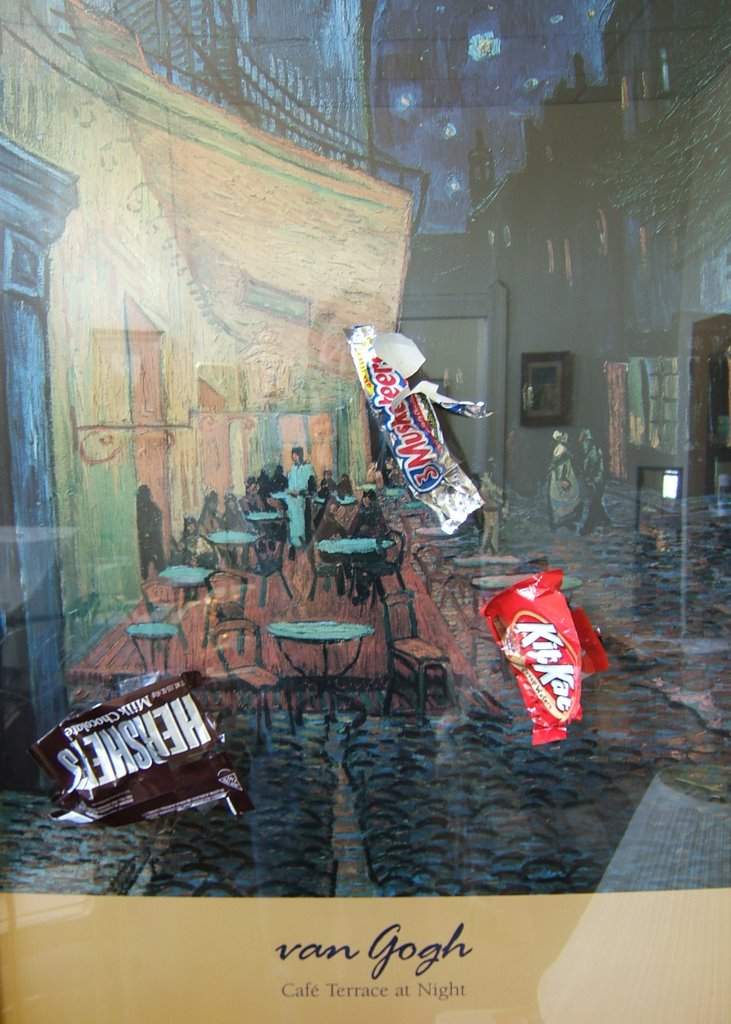
On a day like yesterday, I could not imagine being the author of so wonderful a book as The Really Bad Thing About Free Will. I got caught up in it—a good sign. I read it as a reader, and it affected me. Whoever wrote this thing, good for him. He has done a service to mankind. Now he can drive to the grocery story, sit in the parking lot, listen to classic rock, and eat three chocolate bars while staring at a dilapidated storefront because he feels like a piece of stale bologna in a hot jar this day. He should be out walking, but instead he is sitting in this car getting fat, so he listens to Joe Walsh and eats a Hershey bar, a Kit Kat, and a Three Musketeers bar, in that order. He should stop the carnage, but chocolate coats his world and Joe Walsh owns a vehicle that does one-eighty-five, but he lost his license and now he can’t drive.

You will not believe what happened when I got home from this eating/listening/staring frenzy. In thirty years you could not guess it, so I will tell you. Are you ready for it? I doubt you are. Go away until you’re ready. Go away, then come back better prepared.

All right, then. When I got home, I took a three-hour nap.

I know some ninety-two year olds who have more energy than me. I think my days of getting up at 2:30 a.m. have taken their toll. Perhaps I’m now paying the toll for waking against my will for a week straight at an hour when not even owl heads rotate. I’m driving up now to the glass booth and they’re punching my sleep card. I’m handing all my change to the smiling person on the other side of the window, and I’m falling asleep at the window while the world honks its collective horn at me.

I drank a two-liter bottle of Gatorade yesterday with nothing to show for it. I ate whatever I wanted all day with nothing to show for it. (“Nothing to show for it” means, “no means of burning the calories.”) The only worthwhile thing I did was proofread the new book. For that, I burned a calorie a minute. Whoever wrote that book, good for him. He did a good thing. He capitalized on the wave of inspiration when it came. A wave of life crashed his way and he balanced atop the crest and rode it for all it was worth.

I went to bed at nine o’clock and fell right to sleep. Next thing I knew, it was five thirty this morning. The sun is shining today, so far. I must stay off chocolate, for a while. I’ve got to walk my eight miles today, no matter what. I faxed my approval to the printing company at 10:00 and I pray now that I’m finished with The Really Bad Thing. I must don a more agreeable hat.

Taking into consideration my professional and personal life, I have a hat rack that resembles the antlers on a frickin’ moose.

Perhaps it’s this rack that explains so much of me these days.

© 2006 by Martin Zender
Friday, May 05, 2006

HOW TO WRITE/HOW TO LIVE

Morning is the best time to write because the world isn’t up yet. I’m not just talking about a.m. in general, but about 2:30 and 3 and 3:30 and 4 and 4:30 and 5, and even 5:30. Things get shot when the postal workers come to work beneath my office at 6, for then I hear the rumblings of practical work. This, along with the rising sun, ruins everything for me.

I woke up at 2:30 this morning—again. You cannot believe how tired I am by 5 p.m.

It is only good for a man to be alone when he is writing. How can writers collaborate? In the world of words there is room for only one mind. Charge it with a little caffeine and see what happens. Turn on an electric fan so that the white noise of the fan merges with the white noise of the brain, and see what happens. I cannot imagine being unable to track down a thought stream at 3 a.m. with a cup of coffee and a fan running. At noon, it’s another story.

Writer’s block is simply performance anxiety. It is worrying how you sound and how you will be received; whether you’re good; whether your wife will like it; how many people you will offend; whether or not you’ll sound smart; can you compete with Henry Miller?

Some people live their whole lives chained to performance anxiety. You know them by the hospitals they are in; they get ulcers and die early. They never do anything original. They only do what they think other people want them to do. And if they think they can’t do something better than everybody else, they don’t do anything. (This is too common. People forget that they are unique. It is important to learn to embrace unique imperfection. The alternative is a long and miserable life. The world’s great people boldly publish their self-perceived failings.)

There are two modes in which one writes, and these are 1) creation mode, and 2) editing mode. (I think many of these lessons will work for life. As we go, apply these things to your living.) A writer is both creator and editor. The editor must sit on the bench while the writer writes—and vice-versa—and this is the secret to breaking through writer’s block (and to living life).

A writer in creation mode cannot afford to fret over how the words come out, just that they come. Sitting for minutes staring at a wall in search of the perfect word is fatal to the Muse. There will be plenty of time later for second-guessing. In creation mode, forget the perfect word. The important thing is to come close.

Turn off the dictionary and thesaurus and turn on the mind. Loose the mind from its cage. (If you can do this after the sun comes up, more power to you.) The mind will rub its eyes and look around, hardly believing it’s free. (How often do you let your mind out? We take our dogs for walks, but not our minds. We let our dogs pee on anything and we relish the tail wagging, but not so with our minds.) A free mind is a happy mind. It is a tail-wagging mind. So many filters in life stop up the mind. The key to writing honest prose (and to living an honest life) is to dispense with as many filters as possible. I understand that we must employ filters to function in society and avoid jail time, but the secret of the filters is to leave them off until editing mode. In creation mode, go with the stream of thought without filters. Jump into the stream with whatever words you know and paddle like hell after the thoughts. It helps to know how to type.

Winston Churchill painted. One day, he couldn’t start a painting. He stared at his canvas, unsure how to begin. Just then, a friend drove up, a woman, who was also a painter. She asked what the trouble was, and he told her. She said, “May I?” and he said, “By all means.” She grabbed a brush, sloshed it in some blue, and just like that started streaking the canvas with it to make sky. She hardly gave it thought. (Well, the woman pre-dated the Nike Company. Her motto was: “Just do it.”) Churchill said it was the last time a blank canvas ever intimidated him.

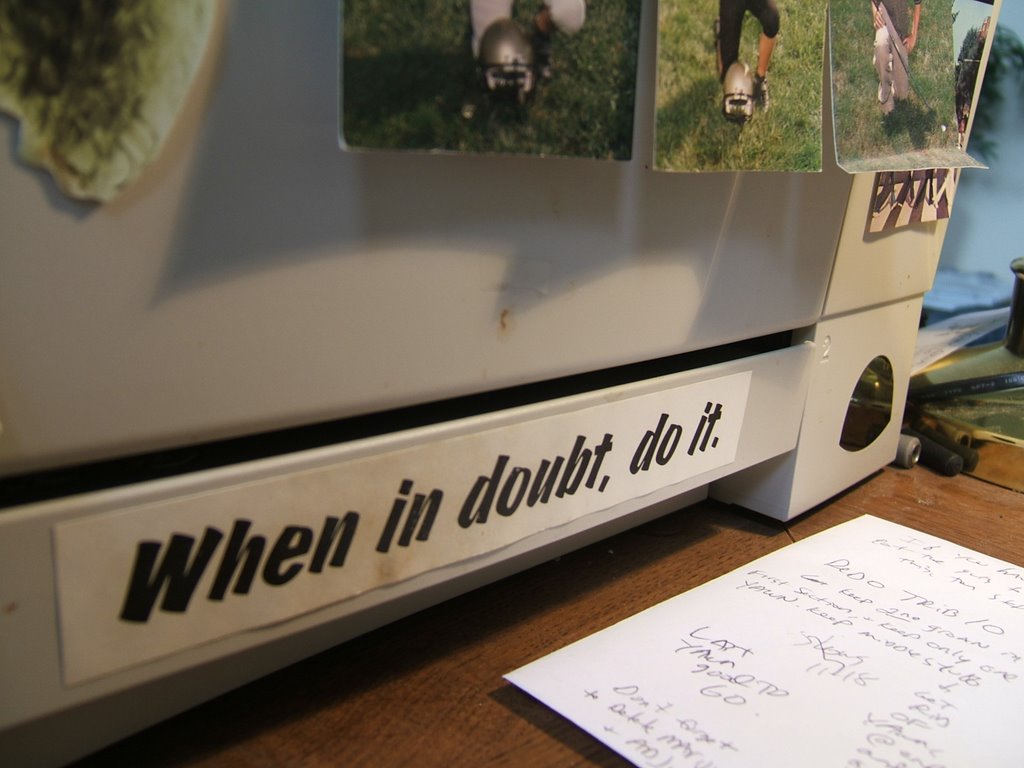
This is why I have a little piece of paper taped to my printer that says, “When in doubt, do it.”

Oh, and have something to say. Otherwise, you’re screwed.

© 2006 by Martin Zender
Thursday, May 04, 2006

LONG COOL WOMAN AIN’T HEAVY

Our great God appears in unlikely places. He has range. He kills and He makes alive. He kisses and removes the gore. He slaps you funny, then slips you away to blue skies and greenery.

Perhaps the most perfect rock and roll song ever written is “Long Cool Woman in a Black Dress.” It is by the Hollies. Strange. My favorite group of all time is the Beatles. I should not say this about the Hollies. There is no comparison between The Hollies and the Beatles. I cannot properly defend what I am writing about, but neither can I ignore men gathered on two momentous days in recording history so vitally and unconsciously plugged into their own Maker that they define humankind by writing and performing such disparate perfections as “Long Cool Woman in a Black Dress” and “He Ain’t Heavy, He’s My Brother.”

And in the same lifetime.

This Godlike feat performed by a silliness called “The Hollies,” beats everything. I would like to know where I was on the occasions of these two recordings, and what insignificant thing I was doing when the cosmos confessed to a silliness called “The Hollies.” Where was I when the men picked up their guitars and nodded to the sound technician? What was the sun doing? Who pressed the “record” button after the count-in? What foods were in the stomachs of The Hollies when they dipped humanity’s secrets from so vast a cauldron of time as this eon? How long before the final echoes from the final notes died, and who had the wisdom to note them?

I do not know these men, or where they came from, or wither they are going, or where they went, or if they went, but were I of their number and had laid down the Beginning and the End of Humanity, I could lay down my burdens in peace—retire in perfect peace—for, as a musician, nothing would remain. What more could I accomplish when in less than five minutes I had sealed for the world the breadth of the cadence of man?

The Lord speaks in mysterious ways.

On two separate and miraculous occasions, The Hollies became as the Deity.

The Deity can speak through music, and He spoke through The Hollies in a recording studio on two separate, disparate and miraculous occasions. It is a record of the reach of man in this eon.

The Hollies. I know nothing of them except for the last will (“Long Cool Woman in a Black Dress”) and testament (“He Ain’t Heavy, He’s My Brother”) sealed into grooves, pressed into plastic by technicians unaware of what they handled, and delivered every day, like the sunrise, on Oldies stations.

Oldies stations, for God’s sake.

What an innocuous noun (“Oldies stations”), and what an innocuous name for a group (“The Hollies”) that soundtracked, in less than five combined minutes, the Alpha and Omega of our eonian experience.

© 2006 by Martin Zender
Monday, May 01, 2006

MELODY RETURNS FROM NASHVILLE


Melody returned from Nashville today, so God is merciful to me. She and Jamie broke three hours for the half-marathon, finishing in 2:50. I finished nothing in 2:50. I did not even finish the laundry in 2:50. I did not complete raising the children in 2:50. I can’t even breathe well in my home because of the dirt caused by me not cleaning it. I think our dog had a stroke yesterday. It rained for Melody between Nashville and Columbus. It did not rain here. I prepared nothing for anybody while I was here. I only watched the extras on the 10th anniversary CD edition of Sling Blade. Besides that, I slept and walked.

I walked 23 miles today. I sneezed and hacked the whole way. I slept six hours last night. I willed myself down the dark road this morning and knew that Melody was still in bed in the too-expensive hotel room. Nashville is the Country-Western music capital of the world. My home is the Depression capital of the world. Crescent Road is the Dark-Before-Dawn capital of the world, and the well in Fitchville is the capital of When to Stop and Look Down an Embankment into a River Where Naked Indians Used to Mate and Shoot Wolves.

Nothing tastes worse in the pre-dawn dark than a bread sandwich coated in peanut butter, honey and wheat germ. Maybe I am allergic to honey. I could not possibly be allergic to wheat germ. Too many raisins stir too many farts from too many people, including the writer of the current paragraph. It is no excuse to stop growing raisins, but a damn fine excuse to stop eating them.

My kids and I did nothing for each other; Jefferson mowed the grass and emptied the trash baskets for his mother. We all existed in a weekend void of vacancy except for ourselves. I did not know where the other people were and they did not know the location of me. This is somewhat metaphoric because I am a responsible person. I told Jefferson that Melody is the hard drive and I am the floppy drive. Jefferson ignored the computer analogy and said that Melody was the engine and I was the windshield wipers.

I don’t even want to know.

© 2006 by Martin Zender

Sunday, April 30, 2006

I MISS MELODY

Without my wife, I would fade. I would still do what I do, but it would be a fading do. I miss her. For all our differences, her presence somehow preserves me. It makes me a better man than I would be without it. I have wondered if I would sacrifice my kidney for Melody. My first reaction is that I would want two kidneys. There are lots of poisons in my body that I need rid of. I value ureters and all tubes leading to my bladder. Scan the scum off my blood, is what I say to my body in prayers at night. But how could I not give a kidney to preserve my beloved? How could I not sacrifice an organ for the organ that is my completion? Nothing is the matter with Melody’s kidneys. I speak out of fear. No one gets dialysis here. My selfishness only goes so far. I would give Melody my heart. I am tired of living anyway. I am tired of all the things I do in Melody’s absence. I am tired of the way my heart quivers like a frog when Melody is not here. Yet I would request anesthetic. Yet they would never bring me out, and neither would I would them to.

Melody could then do a half-marathon maybe five minutes faster.

I would never give her my thoughts; I love her too much.

© 2006 by Martin Zender

Friday, April 28, 2006

MELODY GOES TO NASHVILLE ALONE

Melody left for Nashville this morning. I took a sunny picture of her and kissed her good-bye. I set her up with a CD player adapter for the car, and all the old ZenderTalks from 2004. She has her shoes and her money and a cell phone and books about happy women and a new feminine hair ribbon that she tied back parts of her hair with. Melody looks good in the sun and in the moon.

I waved to her as she drove away. I had made her coffee, and she took that with her. I wrote her a card that she won’t see until she unloads a book from the car in Nashville. Larry and Jamie will look after her.

Melody likes to drive by herself. A car is a private place for a person to think in. A person in a car can easily imagine that he or she controls his or her own destiny; look at all the controls that are in the car. Cars are relative paradises of relative control, what with all the knobs, the switches and the tiny levers. Airline pilots must feel like gods. It is control we lack, so it is control we look for, even if it is only a treble adjustment or a flap switch. Turn down the treble and retract the flaps; see what little it takes for a Deity-like feeling. But see, as well, how hard it is to manufacture it: plastic factories (or plastic factories) come, lots of heat comes, labor unions come.

I loved my wife through the window as I waved at her. I hope she comes back. I don’t want her to die. I drove past the cemetery on the way back to work and I thought, What if Melody dies? What if she gets in a car crash and dies? What if that was the last picture I ever took of her? What if, thirty years from now, I am still looking at that picture and kissing it and telling it that I love it?

The tears came, but I pushed them back. I don’t understand why I pushed them back, because I almost always let them come. I am not one to push back tears. Maybe it is because I think that Melody will have a good time. I am glad the car is sunny and that I made Melody a good cup of Folgers and poured it thoughtfully into her green, plastic mug. She will listen to ZenderTalks and music and will be happy. She will be proud of me for making the ZenderTalks. She likes that I love God. It is the most important thing to her, to have a husband and children who love and honor God. Women need men to be something in this world.

If a man hopes to attract a woman in this world, he cannot hang out on a street corner and watch them. He must do something to make a difference in the world. A woman will notice when a man lives from his gut. (It helps if the man keeps his shoes clean.) A woman always notices a man with a purpose. Women do not care for the male ass as men care for the ass of the female. Women appreciate a man with good solid rump, but women will go first for the man of purpose. If the man of purpose has a splendid ass, then so much bonus. It is all bonus. It is a bonus for which women ought to thank the Deity.

I was walking through the grocery store dressed spiffily one day when the cashier girl said, “You look like a man with a purpose.” I was so flattered. I’ve never forgotten that. It had the same effect on me as the effect on a woman would have should a man say to her: “You are so beautiful.”

I discovered Melody in 1982 through her eyes and, later—when she first came down the steps of her home—through her ass. These led to deeper chambers. I love most of the chambers. I know who Melody is now, and she knows me. This is comforting on a level that I have not named. On another level, it is disconcerting; the name of this level is “disconcerting.” Other people have named it “baggage.” The baggage level works in concert with other, more pleasing platforms. Levels and platforms: this is the mix that every married couple celebrates and endures. God has arranged it thus to build character and to warm a fire in the fireplace.

I hope my wife does not die.

Melody has told me, “If something ever happens to me, I want you to remarry. I want you to find another goddess.”

Why would I want to talk or think about that? I guess for the same reason that crazy people pre-buy grave plots. Melody is trying to leave me something in the terrible wake of her absence. Something like a legacy or a will. But I cannot think about that on top of what I think of as I drive past the cemetery this morning, ten minutes after waving good-bye to my beloved partner of twenty-four years. Tomorrow morning, my partner will walk and run 13 miles as fast as she can with her friend Jamie during what meteorologists are calling to be a thunderstorm. The drama should end in less than three hours. The thunderstorms of tomorrow will contrast with the sunshine of today to make a pattern of the eon for we who appreciate fireplaces.

I’ll probably die first anyway.

© 2006 by Martin Zender
Friday, April 21, 2006

THE MARTIN ZENDER DRILLING COMPANY


In case you do not know it, today is National Drilling Day in Bosnia. This is a Bosnian holiday only. Only in Bosnia do people celebrate this day. People in Bosnia will be drilling today, you can bet that. And not only dentists, mineworkers and army sergeants, but everyone. Everyone will be drilling something, even if it is only a 52-foot well.

If this day is not marked on your calendar, then you must return your calendar to its place of purchase for a full refund, demanding that no questions be asked. Tell the vendor: “I am returning this calendar because it has failed to alert me to National Drilling Day. You see? I am now pointing to the twenty-first of April, and it is nothing but an empty white square with nothing written in it except the number ‘21.’ Does this seem right to you? Does it seem thorough enough for me? Does it seem politically correct to anyone? Shah! Do not even think of asking a question! A globally aware person such as myself must be kept abreast of the ways of other peoples and their ceaseless miseries, and not merely of the phases of the moon or when Canadians celebrate Thanksgiving.”

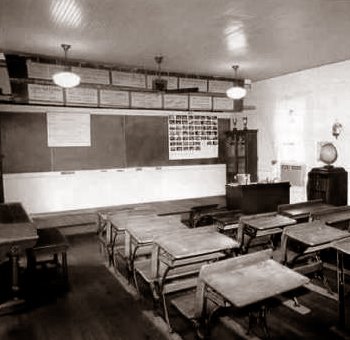
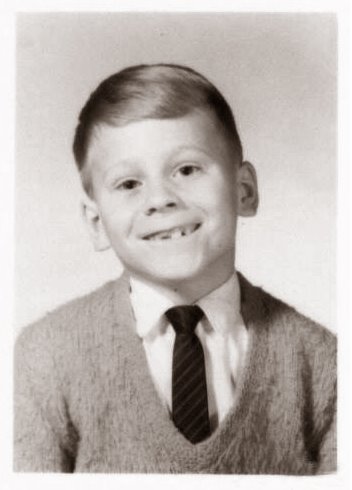
National Drilling Day did not become a recognized holiday until 1986, which is why I did not know about it as a third-grader at Saint Bernadette School of the Burned Martyrs in 1968. For it was then that I began The Martin Zender Drilling Company.

The Martin Zender Drilling Company consisted of me, a pencil, and a desk. I remember the day I began The Great Hole. I gently sat the sharpened point of a number two lead pencil against the surface of my wooden desk. I held it there between my two palms like a Saturn V rocket poised for the moon between two giant palms. But instead of launching it, I began rolling my “rocket” back and forth between my palms in the manner of an upright lathe. That’s how it all began.

I told my friend Brian Malinowski, who was seated next to me, “See here, Brian. See here what I’m doing. See what a genesis is here. I am beginning a hole, Brian, but not just any hole. No, but this is to be The Great Hole. Are you comprehending it? From the looks of you, I must wonder. Shake yourself from the stupor of unbelief! Comprehend the era! For in less than two months, I shall have drilled through this entire desk. And yet this is the beginning of it—right now. You are here to see it, to witness the inauguration of it. This is bigger than Lincoln’s speech at Valley Forge.”

I paused to look around me. Mrs. Ditchwald busied her silly self writing ridiculous-looking numbers on the blackboard. All the other students were either minding the numbers or dreaming of bologna sandwiches. The clock clicked another minute into my promising future while a strange gaseous residue hissed from the coils of a green-silver nozzle on the bottom coils of the heater thing by the window. I lowered my voice. “It is not an auspicious beginning, Brian, I grant you that. But it will be auspicious when you see the results two months from now.”

Each day I patiently drilled The Great Hole. I drilled and I drilled. Brian Malinowski told other students about it, and they all came by at different times to witness my progress. Some whistled in awe. Others asked to see my pencil. “You mean my drill?” I would say. Most classmates had at least some hazy notion of my genius. Others openly acknowledged it. More importantly, each and sundry admired my spunk and pluck. One girl even said to me, “Martin, I admire your spunk and pluck.”

Fortunately for me, it was at this precise juncture that I required a secretary.

“Kelly McGowan,” I said. “You are an extremely intelligent girl. And you wear pastel-colored skirts several inches above your knees. Better legs, I have never seen.”

“And you are Martin Zender,” she said. “Driller of Holes and Failer of Math.”

“Driller of The Great Hole,” I corrected. We both looked down at my speedily-rotating drill, and at the considerable sawdust accumulating faster than Kelly’s puckered, red lips could blow it away. “It’s coming along,” I said. “But things are getting complicated now.” I tried to sound grim and optimistic simultaneously. “This is week three. I’m still five weeks away from blasting through this puppy. But I’m finding it hard to drill and at the same time mentally write my next screenplay. Do you understand what I’m telling you?”

“No.”

“It’s a strain on me, Kelly, to push The Juggernaut of Creativity, along with this pencil. It’s all metaphoric, I fear. I fear I may be going mad. It’s getting to be too much for one man. I’m only human here.”

“What are you saying, Martin?”

“I’m saying that—Would you like to be secretary of The Zender Drilling Company?”

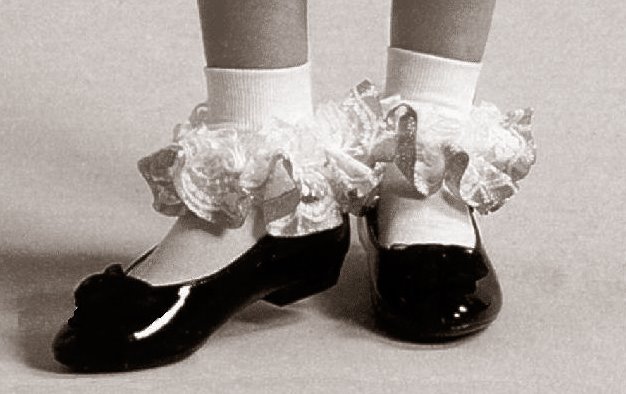
Kelly blushed from the tip of her auburn hair to the frill on her little white socklets. It was so gratifying to see. “I am looking for part-time work,” she said. She looked down and blushed even more. “I do appreciate what you’re doing, Martin. I believe in you.” Without warning, her head snapped up. “Do I have to take dictation?”

I put down my drill and lit a cigarette. “No. I only need you to file reports. I may need you for publicity. You’ll have regular hours and full benefits, I promise.”

“Paid maternity leave?”

“Of course. I’m covered for that.”

She looked down again. “It’s just that things happen.”

“Kelly. I know. Forget it. I already told you: paid maternity leave.”

“What about holidays?”

I put the top of a crooked index finger beneath her pretty chin and brought her head up to look at me. “Never, Kelly. Do you hear me? I promise. Not one holiday, not even St. Francis of Assisi Adopt a Sick Bird Day.”

Kelly let a smile escape her luscious lips. “Okay, Martin. I’ll do it. I want to do it. I think about you all the time. I believe in you. I believe in what you’re doing. I’ve always been fatally attracted to boys like you.” I had a good command of the bottom of her chin, so Kelly looked over at The Great Hole with her eyes only. “I think you can finish this in four weeks, if you put your mind to it. But listen. You have got to promise me that you won’t let a word of this slip to Mrs. Ditchwald.”

I let go of Kelly’s chin, rolled my own eyes, and flicked a long ash from my cigarette seventeen feet into a golden watering can, where it hissy-fitted out. “C’mon, Kelly. The success of this whole project depends on Ditchwald’s ignorance. But why would she even care about The Great Hole? Look at her.”

We both looked at Mrs. Ditchwald. She wore the long cotton dress of a math person, and flat shoes.

“She’s a pawn of the system,” I said. “And look at those ridiculously flat shoes; she could heat up the bottoms of those things and iron shirts with them. She’s an institutional schlep. All she cares about is her crazy math problems and not appearing sexy. Do you think she has a boyfriend? Do you think Janitor Fife ever gives her the look-see?”

“She’s married, for God's sake.”

“Such petty minds as hers I will never understand. Will you? Do you care how many apples Bill has left if his father gives him sixteen but then takes away three?”

“Actually, Martin, yes, I do. It is imperative that I know. I’m trying to get straight A’s in this class.”

I thought of rolling my eyes again, but decided at the last minute to control them. I could not afford to offend Kelly. I took another long drag from my cigarette and looked up at the brown underbelly of a light fixture, where I blew a large cumulonimbus of smoke. “What could a person such as Mrs. Ditchwald have to do with something as stupendous as The Great Hole?”

Kelly looked up to see what I was looking at. I suppose she thought it was a spider. Actually, there was a spider now, a small brown one, descending on a strand of web; I mentally named it Vaughn Spindlenuts. “Oh, I don’t know,” said Kelly. “Maybe she’d be mad about it because it’s her math class and you’re dissing it.”

Oh, how Kelly McGowan could work the italics function! I flicked another ash, harder this time, sixty-nine feet out the open window and into a thirty-gallon vat of holy water, where it hissed, vaporized and died. I looked down to pet my hole. I slowly stroked it. “Kelly. Your tone has changed. You know it has. Do you know how much that hurts me?”

“Martin, please…”

I needed a fat lie just then, and it came to me. “Ms. McGowan. I don’t need you, you know. I can do this by myself. I’m offering you a job, and a good one. If you don’t see this as history, then think of it as regular employment. Think of it as another entry on your resumé, if that’s what it takes for you. This is a job, and I need a secretary. Case closed.”

I had hurt her feelings. I instantly regretted my words, instantly wished I could take them back. I would get on my knees and beg Kelly if I had to.

Just then, something snored. As I located the source, inspiration struck. I gestured to our right, where Brian Malinowski made the obscene noises of an unconscious dork. A string of drool hung from his bottom lip, seeped over the round edge of his desk, and reached to the floor where it formed a lake that reflected his fat face. “Look at Brian there,” I said. “Do you think he knows how many apples Bill has left?”

“No way,” said Kelly, returning to her old self. “In fact, he told me yesterday that he thought Bill had bananas. Can you believe that?” Kelly shook her head and sighed. “He’s a fricking moron.”

I dropped my cigarette to the floor and fatally injured it with the toe of my loafer.

“That’s what I’m talking about,” I said. “And I think he might be addicted to pornography. He was with me at the beginning, but now look at him. He couldn’t stay the course. He forsook me, just like the disciples forsook Jesus. In fact, look around you, Kelly. They have all forsaken me. No one understands—not one! Only you know what I’m about.” I stared hard at Kelly’s awesome blue eyelids. “You alone are left.”

Kelly came aboard that minute, and did things ever change in my drilling speed. In four weeks, the hole was finished, just as Kelly said it would be. To this day I do not believe that I could have finished The Great Hole a week ahead of schedule were it not for the support of a woman, for the belief of a woman, for the inspiration of a woman.

Brian missed us passing through the last centimeter of desk, as did every other moron in my class. Only Kelly was there. She cried, as did I. It was a moment to remember. We held the pencil together and drilled, Kelly and I, palms pressing palms as that final eight-sixteenths of a centimeter disappeared beneath the lead of our pencil/drill.

Mrs. Ditchwald pulled me harshly from the room the next afternoon, pulled me by the tender apex of my right ear into the hall, and down to the office of Sister Dominna. It is possible that a boy jealous of my relationship with Kelly tipped off Ditchwald—but who cares how she found the hole? Sometimes a person cannot feel pain. And sometimes, if the high is high enough, a person can even smile through it.

“So many students sit in that desk throughout the day!” spat Dominna, cracking her pointy black knuckles. “And yet Ditchwald tags you.” She narrowed her eyes. “I have insight into you and that little hole of yours, Zender. May I salvo a query into the hows of your arrest?”

“I think that you already know, Herr Dominna. So say it. Say it with all your might for the benefit of all my readers through the eons of time. Say it with gusto before the commencement of my sacred punishment.”

“Gladly, Master Martin: You signed the damn thing!

Sometimes, if the high is high enough, a person can smile through any sort of temporal discomfort.

© 2006 by Martin Zender

Tuesday, April 18, 2006

SLEEPING APART

It has traveled through the grapevine that some near and dear ones want Mr. Zender to go to Nashville with his wife.

Some people believe that married couples should sleep together every night of their lives. I was once among this contingent. This belief is due to the supposed moral necessity of couples feeling miserable apart—even if the respective parties wouldn’t. This false moral necessity is a smokescreen for a fear of oneself and of one’s own thoughts. It is fear that one may not be happy in one’s own skin or, worse, be temporarily relieved by the absence of one’s lover.

Contrast this with the true moral necessity of fearless happiness. It is my present opinion that those incapable of solo contentment are incomplete humans. And two incomplete humans do not a single person make. Instead, they make snide remarks about one another. Or one is made impatient while the other grits the teeth; or one makes cuts while the other bears the wound. The two become one, yes, but sometimes only one check mark on the right side of a marital statistic. Each wishes the other to become what they can never be; what fun. (Don’t try it at home, kids.) Many couples keep sacrificing until nothing remains but Emerson’s hobgoblin: foolish consistency. So thank God for that ever-reliable distraction:

Grandchildren.

© 2006 by Martin Zender

Friday, April 14, 2006

PRETEND YOU’RE UNCLOVEN

I don’t know if this has anything to do with the arrival of my new hammock and the netted wombness of my new personality, but Melody and I have decided that she should go to Nashville for the half marathon with Jamie and her boyfriend Larry (on the 29th of this month) by herself and leave me at home. Maybe it was my suggestion. I am getting the feeling that Melody needs time by herself. We all need that. I am very sensitive to a woman’s moods and feelings, especially when that woman vents through her God-given vents. Do not think badly of Melody. I yell and cry as well, but usually in the sanctity of my office. When I try to put my fist through my door at various times and for various reasons, it is a sanctified time. I must have quiet and the angels in attendance. I must have a somber and holy place in which to heave pocket change. It is within the confines of my priestly vestibule only that I throw potatoes against walls and clean my desk with my forearm. Remind me to tell you sometime, in detail, about how I clean my desk during times of great stress. It is a most rapid and most efficient method—involving the forearm—and I am thinking about utilizing it at all other times, due to its rapidity and efficientness.

I would not want to be a woman in this life unless I could do it while preserving my male understanding of sex. But neither would I necessarily want to line up with 23,000 other people in Nashville to be segregated into “bins” and walk 13.1 miles over a carpet of paper cups. I love my wife and I need her, just as Jamie needs Larry and Larry needs Jamie. Larry says that Jamie is “so beautiful,” and she is. Jamie is beautiful. But Melody is beautiful, too. The first thing that attracted me to Melody was her eyes, but that was only because the first picture I saw of her framed her neck and head. Had she been framed from the neck down, my eyes would surely have gravitated toward her ass.

My wife has a beautiful ass. It is better than Jamie’s, I think. Does that offend Larry? Does it offend Jamie? Does it offend my readers? Does it offend the Maker of the Female Ass?

(It will offend Melody, I'm sure. She did not approve the use of this photograph, and did not pose for the sake of this blog. I talked her into this shot a year and a half ago for inclusion in my marriage book, Shagah. I was studying the waist/hip ratios of women and the effect specific ratios have upon males. Hey. Somebody had to do it. Melody eventually nixed the photo for inclusion in the book, and so did my agent at the time, who was a woman; she was probably jealous. But I'll be darned if this photograph is going to collect dust in a box in the closet.)

No doubt Larry will say that Jamie’s ass is better than Melody’s. That’s fine. Of course he would say that. He must say it. Is it true? I don’t know. I admit that I have not analyzed Jamie’s ass. To do so would be improper. I have a feeling that it's probably terrific. I do not wish to call in an objective party. If I did, I would call my friend Jim. But he thinks that his wife has the best ass, so there you go. To each their own asses.

Or, if you wish, you can choose not to discuss it. Or to appreciate it. Or to write about it. You can go ahead and call your own ass a “hindquarters.” Or “a butt.” Call it "a tush," if you want. You can call it an Oreo, for all I care. You can call birds “women.” You can call women “birds.” You can call chipmunks “birds,” if that’s what hangs your hammock. You can eat lots of food and make your ass grow to the size of a zeppelin, if that’s what you want to do. You can refuse to exercise your God-given ass and park it instead on a couch for the remainder of your transfatty days. Or you can pretend that you don’t even have an ass; pretend that you’re uncloven back there; whatever. Pretend that God didn’t cleave you there.

Go repair a lawnmower, if that’s what empties your sweeper bag. Inject cream into Twinkies with a cream gun, if that’s what wrings your sponge. Call the cream gun “a cream gun,” if that’s what you want to do. Or call it “an orange peeler.” Or call it “a Kirby vacuum cleaner,” I don’t care. Make up whatever euphemism you want for the cream gun. Pretend it doesn’t exist, for all I care. “There are no Twinkies in the world.” Fine. Repeat that like a mantra and fall asleep to it in your own personal twilight, if that’s what forks your hay.

Work on lawnmowers for a living, for all it matters to me. Analyze the different sizes of spark plugs, or whatever. Laud the gasoline engine, for all I care. Work with grease and poop. Catch the poop of cows into a trailer and sling it into fields with automated forks. Write about the spark plugs and call them “spark plugs.” Or call them “gangplanks.” If you’re that removed from reality, why not go ahead and call cow poop, “manure.” Whatever. Whatever it takes to untangle your Slinky, go ahead and do it. Or don’t call the poop anything, if that’s what strains your beets.

Or don’t even write about it. Or don’t write about anything, if that’s what you want. Don’t record anything, for all I care. Leave everything alone, if that’s all you can take. Unhandle the untouchable, if that’s what you can’t touch. Or touch everything. Or don’t touch anything. Or record everything. Or don’t record anything. Or leave everybody to guess, if that’s your God-given bent. Or dip people into their common humanity and make them face it, if that’s what frosts your honey bun. Or become a surgeon and lay out the intestines; somebody named the duodenum, you know. Or join a religion, if that’s what cores your pear.

Do what you will under this great sun of ours because it is imperative that you do so.

© 2006 by Martin Zender
Thursday, April 13, 2006

TENDER BABY IN A NEW WOMB: THE HENNESSY ARRIVES


In a flurry of brownness, the UPS man came today with a package so small that it could not have been my hammock. But it was.

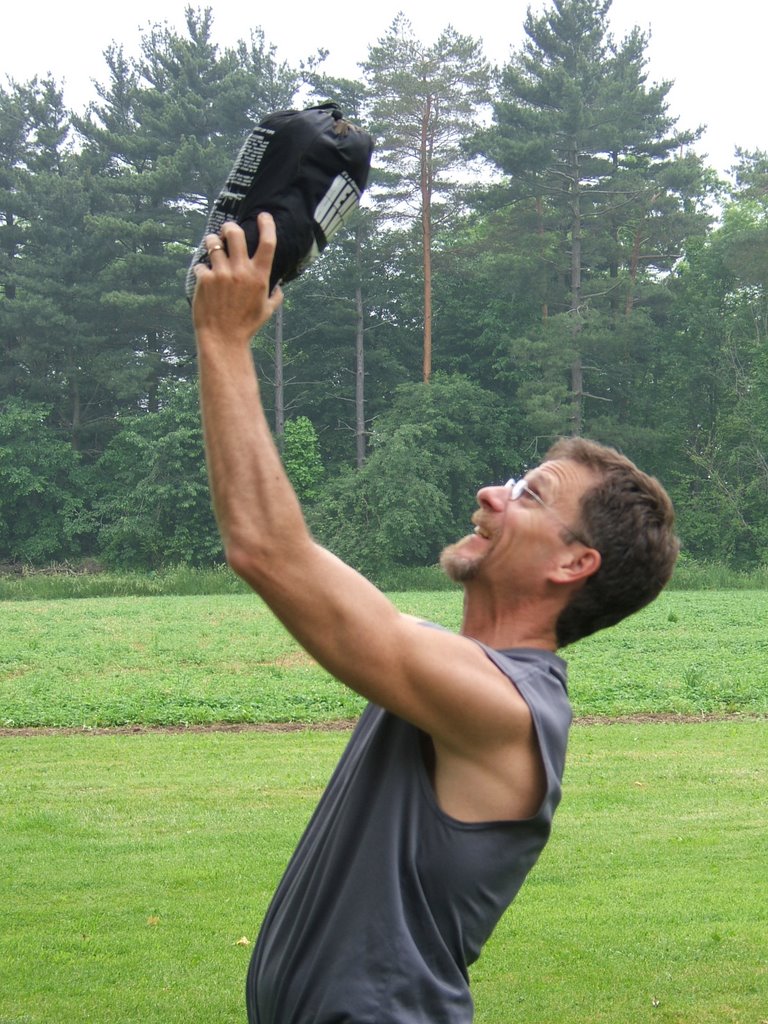
I held an impossibly small black bag with white letters on it and a diagram on the back, also in white, showing the proper way to lash my new pet to a tree. I held the bag in my hands and lifted it up and down and up and down, testing its weight. It tested light. I smiled and looked down on my new home. I benedicted it with my eyes. I removed it from its bag. It rewarded me with nylon and mosquito netting and a smell better than that of a new car. I cannot tie knots, however. I have not yet begun, in this life, to lash. So I went to www.hennessyhammock.com to watch a tying/teaching video by someone who used to be or still was a Boy Scout.

You can watch this amazing video for yourself under the section titled “Set-up Instructions.” It is rated “R” for language, violence, and adult situations. You can see for yourself how easy the procedure is. You can see for yourself why it would take a normal person thirty seconds to understand and perfect the procedure. You can see for yourself why it took me an hour to understand and fail to perfect anything near the procedure. Thank God for the pause button. Thank God for rewind. Thank God for the Boy Scouts. Thank God for popcorn and Good ‘N Plenty.

I took my pet to the top of the woods behind our house and lashed it between two trees. I liked it. My pet liked it. The bark of the trees liked the feel of the webbing strap and the tautness of that strap against its rugged skin. The sun and the breeze liked the new smell; they wafted it proudly about the woods and then up toward the tiny puffs of cloud.

My wife called her friend Jamie when I left the house and they began talking about me. I think my wife is proud of me. I think she is excited for my new hammock and me. I think Jamie respects me. And so I cannot understand why Melody was laughing and whispering. I cannot understand why Jamie was looking out her window with binoculars and laughing as I walked across the field toward our woods. Unable, was I, to interpret what appeared to be Jamie’s mirth.

The bottom of the hammock has a slit running halfway up its length. I poked my head through that, sat down toward the back of the hammock, pulled in my feet, and that was it. I was in. I was in the Hennessy Hammock. The entrance Velcroed itself closed behind me and every mosquito in the woods became instantly stymied. I, myself, became ensconced in nylon and netting. The trees benedicted me with their eyes, and bravely sustained my weight.

Do not ever laugh at—or artificially magnify—a tender baby in the new womb.

© 2006 by Martin Zender

Tuesday, April 11, 2006

TO BE A DUCK

I told you some time ago that if I could be any animal, I would be a duck. I told you that someday I would tell you why.

I do not like where my eyes are. I want eyes at the sides of my head. And I want black eyes the size of small marbles. But what I want most of all is a bill.

I want an orange bill. A bill is what I want, and it must be orange. I want a bill with which to eat and preen. I would let people call my bill “a bill,” but never a beak. Never a beak, or “a hard nose,” “a preening blade,” or “a saw-toothed nibbler.”

My bill will look so fine beneath my small, duck-shaped skull. The best part about billdom is the purposeful expulsion of quacks from it. All the livelong day: expulsing purposeful quacks.

The greatest noise in the kingdom of animals is the quack. It comes from the bill of the duck, and nothing else. The word itself is worth a fortune: quack. It is spelled like it sounds and is savory. I would quack all day. The quack is rich and self-explanatory. Every answer to every question, statement, or quotable quote, would—from me—be a quack.

“How is it, really, being a duck?”

“Quack.”

“What does a woman want?”

“Quack.”

“You know your house payment is due.”

“Quack.”

“Seventy more soldiers died in Iraq.”

“Quack.”

“These are the times that try men’s souls.”

“Quack.”

“Your nostrils are in your bill, evenly distributed.”

“Quack.”

“It’s time to save the planet.”

“Quack.”

“Your bill is not a preening blade.”

“Quack.”

“How much money do you have?”

“Quack.”

“You’re kind of cute.”

“Quack.”

“From your bill are expulsed many and purposeful quacks.”

“Quack-quack.”

“Are you warm and dry?”

“Quack.”

“This pond is drying up.”

“Quack.”

“Quel heur est'il?”

“Quack.”

“Simplify.”

“Quack-quack.”

“I know people at the pellet company.”

“Quack.”

“The sun will blow up in a million and sixty years.”

“Quack-quack.”

I would quack (and quack) all the livelong day.

As I duck, I could do it all. I could and I would do: it all. I would swim and fly and walk. When I wanted to walk, I would walk out of the pond and walk. When I wanted to swim, I would walk into the pond and swim. When I wanted to fly, I would fly out of the pond and fly. Or I would walk out of the pond and fly. Or I would fly out of the pond and walk. Or I would swim out of the pond and walk and fly.

The best part about flying would be landing in the pond. I would coast to the pond and backpedal with my wings to land with a green and foamy splash in the pond. The landing would be soft and nearly silent. Then I would just paddle around like it was nothing to me, which it would be. Unknown, to me, would the wiles of fatigue be. I would take off and land in a foamy splash and paddle the circumference of the pond looking sprightly—a hundred times a day. People would throw me pellets. I would consume pellets like a nibbler. I would land for pellets and walk for the littlest nibble. I would walk on my webbed feet toward the weedy-colored food.

I want webbed feet that are orange. My feet must match my bill. I would invite the masses to touch my marvelous webbing.

“We will throw you pellets if we may touch your webbing.”

“Quack.”

“The webbing is marvelous to touch. No other duck lets us touch it.”

“Quack.”

“You’re kind of cute.”

“Quack.”

“You are such a unique duck.”

“Quack.”

”We want to be you.”

“Quack-Quack.”

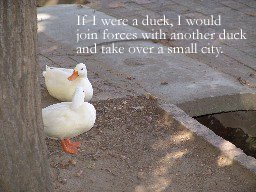
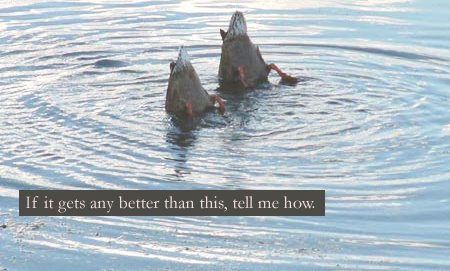
The two best parts about being a duck would be 1) the location and placement of my nostrils on my bill, and 2) my willingness and ability to stick my butt in the air out of the water, very high, while the rest of me is underwater searching for food or simply letting people see my orange, webbed feet paddling hard to keep my butt in clear view of everyone while I open my black marble eyes underwater and look through the murkiness at anything I want to, including the people who see my smooth butt so high up in the air, and how the water runs down my smooth butt, and how my legs match my feet that match my bill which works so hard quacking underwater and making bubbles come up until I fly away when I want to at a right sprightly clip.

Oh, to be a duck.

© 2006 by Martin Zender

Saturday, April 08, 2006

LAST LAUGH IN AMISH COUNTRY

I walked 32 miles last Sunday, 21 of it through Amish country. I have a fantasy about Amish women, thanks for asking. I imagine that they are all sexually repressed and ready to blow. All my fantasies are duds, however. When the pin is finally pulled, none of my fantasies ever explode. If you want the truth of a thing, analyze my fantasies and believe the opposite. The truth of this Amish matter, therefore, is that Amish women are happily asexual and ready to weave a blanket.

I passed through a small town, Vicksburg, named after the historic Civil War battle. The town was old enough, I believe, to have known the smell of gunpowder. Walking through, I expected to see General Lee himself galloping out of the morning mist. Hand-painted lettering on one of the wooden buildings said, “D.W. Coburn, Horseshoer.” Coburn, no doubt, fought for the Union. At this early hour, he was probably still in bed.

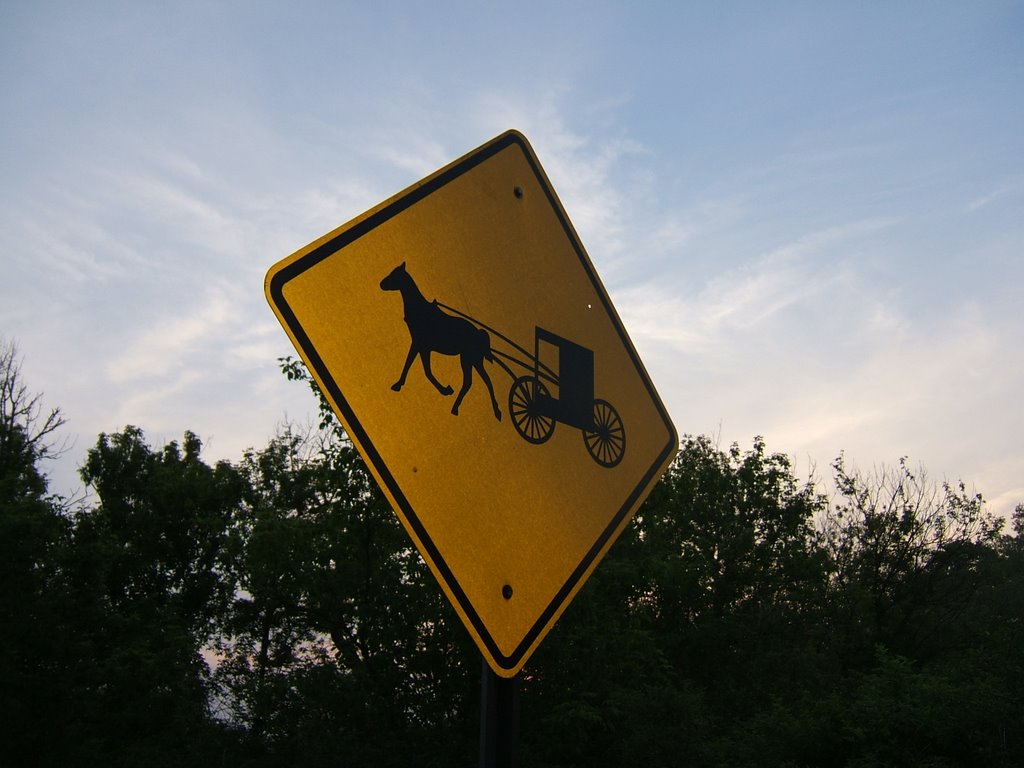
I sipped some Gatorade from my drinking tube and slapped myself back into the 21st century. Turning a corner out of town and heading north on Gimbly Road, a string of Amish buggies came down a hill toward me at two-hundred yard intervals. If you have never seen such a thing, you should. It’s a postcard on a squeaky iron rack in a sausage-scented restaurant. The sight slapped me back into 1865, only this time I expected John Wilkes Booth to hobble from a barn.

I waved to the occupants of the buggies as they passed. I saw some of their faces. Who were these people? I considered jumping into one of the buggies: “Who are you people?” I would mount the vehicle, nudge open the door, snuggle in beside the happy (?) couple and begin querying them, beginning with the woman.

“Excuse me, ma’am. Are you sexually repressed? Don’t mind me, I’ve just always wondered. Oh, hello sir, yes, thank you for hitting me. I thought you were all pacificists, but I see that another Amish fantasy of mine has failed to detonate. May I have a word with your wife? That hurt, you know. My name is Martin Zender. Hello, ma’am. You are happily asexual, I presume. Is this your blanket?”

But I only waved. One young man wore round glasses and was laughing. The man was laughing. What was he laughing at? What else but me? He and his wife no doubt found humor in my Amish fantasies. Are they that transparent, my fantasies? They must be. The horses clopped toward church, I knew. If the riders were to laugh at all this day, now was the time. Chuckles, at church, get buggy-whipped to the sod, where the pews are screwed in and the hobnailed boots of the congregants scuffle. It was now or never, and here was the opportunity: a stupid-looking walker with hilarious Amish fantasies. Oh, they were laughing at me, all right.

When the last of the buggies passed, the bell of a distant church tolled. It tolled again and again—for me, I knew. It sent a shiver down me. It was now 1837 and the rote of a dark tradition overcame me. I had to get out before General Washington showed up. Or worse, a contingent of the British.

I stopped for a break at an old cemetery and sat down to put my back against the wire fence and eat an orange. A car went by. Then two. Then three. I peeled a sticker from the orange that said, “Sunkist.” Slowly came the world again, the one I had known. Straining, I could no longer hear the church bell, or the clop of a single horse. I got up and stared for a long time, behind me, at the crumbled stones. Beneath these markers, they all lay still. Not a soul laughed. I was humbled and ashamed of myself. They had all once heard the bell that had tolled so recently for me. I strained in my mind’s eye to see the Amishman again. I would not be so rude this time. I would bow, courteously, to his beautiful wife. He was laughing at me, yes—at me and my time.

To some, there is no time, and these are the Amish, the church bells, and the citizens of the grave.

And the only ones of these three able to laugh, do so.

© 2006 by Martin Zender
Wednesday, April 05, 2006

A BROTHERHOOD OF CREEPIES

I used the money from my tax refund to order the Hennessy hammock. What a day it will be when the Hennessy arrives. I’ll be waiting for the UPS man like I used to wait for the mailman when I ordered X-Ray glasses from comic books and the “super magnifying” telescope from Cap’n Crunch cereal.

The idea of stealth camping is growing on me. I like the idea of never again paying twenty bucks at a crowded, noisy campground for the privilege of leasing patches of sod infested with sticks and rocks. On my daily eight-mile walks I see beautiful woods with straight, tall trees that I would rate as highly hammockable. I pretend that I am coming upon them on my walk to Pittsburgh. But there are large yellow signs on many of the trees in front of some of these woods, and these signs say, NO HUNTING, NO TRESPASSING. I ask myself what I will think when I see signs like these on the walk to Pittsburgh. I answer myself: I will think, thank God that I will not be bothered by either hunters or trespassers this evening.

At first, the thought of sneaking into a woods at dusk to spend the night alone hanging between two trees creeped me out. But then I realized that I was on the good end of the Creep Factor. I will be the creepy one. It has been my theory since embarking upon self-propelled adventure thirty-three years ago that creepy people leave other creepy people alone. We creepies are a brotherhood, you see. We only creep other people out, never ourselves. We creep out people who live the whole of their lives avoiding creephood at all cost. (This includes most people.)

I plan, on the Pittsburgh walk, to enter the woods at dusk and vacate before dawn. Let’s say there is a person walking down a country road in Pennsylvania at 5:30 a.m. Suddenly, the person hears something large wandering out of the woods, and that something is clearing its throat. Now, which phantom of the dawn will be wetting pants, the one on the road, or the one emerging from the woods?

On one of my eight-mile training walks last week, I walked into a woods off Route 9. I’d had my eye on this tract for weeks, pegging it as a good one to hang in for practice. I had yet to order my hammock, but I wanted to scout this potential campsite in broad daylight, just to see what would happen. I wanted to pretend to be on the Pittsburgh walk, just to see how it would feel to duck into a cluster of someone else’s trees.

The nearest house was three hundred yards away. I waited for a lull in the traffic, then walked in. I went in twenty-five yards, found two beautiful trees spaced perfectly apart, and stood there. There were no alarms, no dogs, no cops. Holy cow, I said to myself, this will be easier than I thought. I pretended to tie my hammock to the trees. The woods felt so peaceful; cars swished by on the highway; I took a leisurely leak. I watched the drivers’ heads through the trees, to see if any were looking at my leak. None of them looked at the leak, not one. Why would they? “Oh. Harold. I’m going to check all the woods between here and Broomsfield to see if there might be anyone hammocking in them—or possibly leaking.”

I was good to go in more ways than one.

My only other concern was the critters of the woodlands. I like animals, but I do not want eaten by one. In this part of the country, however, there are few man-eating beasts afoot. There are, however, beasts that walk through the woods at night and make twigs snap. They scurry and forage and snap twigs, these beasts, and I do not want to hear them. Of course it’s a deer or a possum or a raccoon—but what if it isn’t?

My son Jefferson and I were in the car one evening when the car started making a strange noise. “What’s that noise, Dad?” asked Jefferson.

“I have no idea, son,” I said. “You may as well be asking me for the secret of the universe. But actually, I do know the secret of the universe. But cars and engines? Sorry.”

Still, I could not let the opportunity pass to offer fatherly wisdom to my son. “Whenever your car starts making noises, do what I do,” I said.

“What’s that, Dad?”

“Turn up the radio.”

I plan on applying the same principle to the problem of snapping twigs: I will wear the best pair of foam earplugs money can buy.

Everything is now in order, all problems solved. And so, Come quickly, UPS man.

© 2006 by Martin Zender
Tuesday, April 04, 2006

WITH A BUTLER ON THE LADDER AND A PHIPPS IN HAIR

I was driving my thirteen year-old son Jefferson home from baseball practice yesterday when we (I) decided to flick on a classic rock station. On came Led Zeppelin’s Livin’, Lovin’ Maid. Did that ever bring back memories. Naturally, I had to tell Jefferson about the time I lip-synched the song in front of my entire fourth grade class while wearing green and white checkered pants, a yellow shirt, a Daniel Boone vest, saddle shoes, eating a cherry Tootsie Pop—which served as my microphone—and guessing madly at the lyrics. I hope I did not make a mistake confiding this indiscretion to my youngest son. Jefferson left home this morning with a bag tied to a stick slung across his shoulder, so when he returns home (if he does), I will ask him.

The year was 1969. The occasion was a fourth grade lip-synching contest. What sort of manic teacher would conduct such a competition, and for what purpose, I do not know. But now, in a bout of remembrance, I do know. It was the infamous Miss Clouse.

I remember the day Miss Clouse first walked into our classroom. Actually, she ran. She was late, and our first vision of her was of mincing red heels. She had hair that rose above her forehead in a That Girl pompadour. The hair was Harlow gold, however. Lips: Sweet Surprise. Her hands were always cold; she had Rumplestiltskin eyes.

Each student was to bring a record and be prepared to humiliate him or herself to it. Miss Clouse was the Mistress of Lasting Embarrassment and stood ready at the turntable. Today, I hope it was worth it to her. I hope, at least, that her children are unharmed by the events of that unforgettable afternoon.

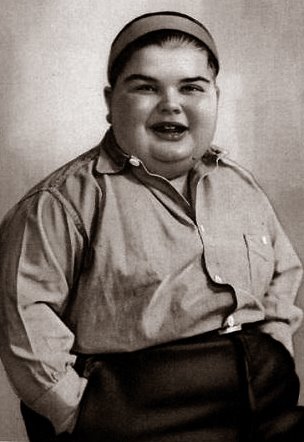
Classmates before me did acts like The Rhonettes. They lip-synched to singers like Bobby Darrin and The Everly Brothers. One crazy kid did Buddy Holly’s “Peggy Sue.” He wore Buddy Holly-style glasses but he looked ridiculous in them because he weighed two hundred pounds and his head was the size of a Swiss exercise ball. He did the “…Peggy Sue-a-hoo, hoo-hoo-a-hoo-hoo” part, and everyone laughed. Everyone thought it was ridiculous. But no one had seen ridiculous yet.

My aforementioned clothes (the pants, the jacket, the shoes) were not only a part of my act, they were part of my regular school attire. For me, every day was an act.

I had begged my mother to buy me the green and white checkered pants. Something about the pants reflected my soul at the time (it was my Green and White Checked period), and I wished to display that to the world. My mother, however, wanted denim for me. Her idea of normal was blue jeans. This clashed impossibly with my idea of normal, which was green and white checks. My mother said, “Why don’t you want to wear a regular pair of pants like a normal boy?” I answered that normal-boy clothes did not reflect the current state of my soul. Mother had no answer for that, so she bought me the pants. Winning this argument was easy compared to the time I wanted saddle shoes—that battle took time.

“Saddle shoes are for girls,” my mother said.

“Not really,” I said. “I saw a picture of Uncle Jim in saddle shoes. He’s a famous writer and he lives in Hollywood.”

“Your Uncle Jim is strange.”

“What if I’m the artsy type?”

“Then I’ll probably have to take you to a psychiatrist.”

“Oh, look! Here’s a swell pair of saddle shoes. And they have my size!”

My mother bought me the shoes and I became the talk of the class. I was obviously a trend-setter. It was not my fault that no one followed my trends. At least I started conversations. I got people to thinking. Kids actually wanted to be seen with me. I was a ten year-old Happening.

I got the Daniel Boone jacket at the Myers Lake Shopping Plaza. A
men’s clothing store there was giving them away. In fact, they were giving people a quarter to take one. Once again, my poor mother was at my side. I said, “Look, Mother! They’re giving away Daniel Boone jackets! In fact, they’re paying people a quarter to take one. Have you ever seen a sale as crazy as this one? Have you? Look at the cool fringe hanging off the jackets! I sure wish I had one of those. I could settle Kentucky in one of those things. Can you imagine how I would look in that Daniel Boone jacket and my checkered pants, and my saddle shoes? Why are you stopping? Mother, are you getting dizzy? Look! That man is handing us a quarter!”

The shirt I procured later was the color of the Beatles’ submarine, only yellower.

The Swiss ball kid sat down to resume his life of doom, and it was my turn. Miss Clouse dropped the needle on my 45, and I was off to another world. It was a good world. I liked the world.

Most of my classmates still remember my performance. For some, it was a pivotal moment in their lives. One has since said, “Martin, when I saw you do Livin’, Lovin Maid, it opened doors for me. I realized then that anything was possible. You were outside yourself; it was like you had no self-consciousness, none at all. None of the things that normally hold people back affected you that day. And you kept eating that sucker! It was the way you ate it. And how you licked it like a lunatic at the end when Robert Plant does that crazy thing with the ‘L’s.’” My friend got teary. “You changed my life, man.”

But it was another boy who gave me the “thumbs up,” through the glass, as I sat alone in the principal’s office.

© 2006 by Martin Zender
Saturday, April 01, 2006

CURLICUES OF A WICKED EON

My oldest son Artie and I went out this late afternoon to film depressing scenes for an edition of ZenderFilms. Depressing scenes are so easy to come by here. All one need do, really, is aim the camera any old where and press the record button. But Artie and I wanted to create something. He is a filmmaker, I am writer; we would put our heads together—and probably get them wet: it was raining.

Have I told you about ZenderFilms? Looking back now, I see that I haven’t. I want to create a series of video vignettes that will teach small but monumental kernels of scriptural truth. I’m talking eight to ten minute episodes in the reality television vein.

One of the pieces I have in mind is a series of depressing, outdoor shots, accompanied by a somber voiceover (mine) describing the nature of this current wicked eon. Evolution? No, my friends. The earth is in a state of de-volution, and so many things in this world conspire to take us down with them. The piece will teach the futility of certain brands of human escape, while heralding the benefit of others, such as sleep. Eight hours of sleep, you know, is a pearl of great price to me, and one of the most gracious gifts bestowed by God upon the sons and daughters of humanity.

My son is a serious filmmaker and has invested in a $3,500 video camera. He was afraid of getting it wet, so insisted I take an umbrella and hold it over him while he shot. I was happy to do it. I loved this idea of us being a film crew. It was only him and me, but that counted as a crew to me. Off we went to make something out of nothing.

The process of creation thrills me. I was born to create; God planted a small piece of godhood in my breast. To make an abstraction concrete touches sensitive chords beneath my rib cage. The artist has a thought, or a dream, or a lesson to teach. He or she perceives, in one moment, a sliver of universal truth. But, like the primordial earth, it is without form and void. It is invisible. This light of revelation exists only in the head or the heart or the soul of the one chosen by God to articulate it. The things exist now only in the way the artist’s hand shakes, or in the way the heart beats, or in the way the artist sees light where no light is, or shadows where light washes everything.

The challenge and the torture of the artist is the God-imposed necessity to bring forth into concrete existence the abstract thought. Even God records truth for human consumption. Truth, to be appreciated, needs seen, or heard, or read, or touched. God mercifully provides the media. This media is dug from quarries, or mined, or ground into pigments, or stripped from the bark of trees, or fashioned into hollow pieces of wood. If the artist is a sculptor and the medium is marble or clay, the truth takes three-dimensions. If the artist is a musician and the medium is music, the truth speaks via certain notes played a certain way in a certain order at a certain time. The art not only resides in the notes, but in the inspired spaces between them. A piano keyboard articulates one truth, a violin another, a human voice yet another. If the artist is a painter or photographer, he or she captures a moment of time with pigment, with color drawn from the earth’s native hues, or with light on loan from the sun. The filmmaker captures moving images. The writer places letters side-by-side, in the right order, at the right time, cajoling the letters, belaboring them, marching them en masse toward a desired effect.

As we set out, I felt large. Artie and I were gods. Yes. Small ‘g’ gods, enabled by the capital “G” God, graced with a mood-capturing medium, energized by the goal of bringing His light to the world. What was this but a fresh crack at Eden? It was a means of rectifying the temporary desecration of man.

We began at a place on my walking route where a county crew hacked away at a new bridge. It was Saturday afternoon, however, and the crew was gone. But there was plenty of mud, plenty of grease-soaked chains, plenty of brown watergurgles running nowhere.

Near the site, a trio of gray gain silos rose above a farm through the mist and into the gray sky. “Let’s get that,” I told Artie, and we hopped from the car. I extended the umbrella while Artie’s medium recorded an eonian moment headed for the past. The silence was somber and holy. The silos and the silence, and my son and I—these things impressed me. God was teaching me a lesson about the wicked eon.

We filmed odd tree branches, some weeds, and some slabs of concrete from the unfinished bridge. It was growing dark. Satisfied with our work, we headed home. On the way down our road, the property of a neighbor suggested itself.

“Stop here,” I said to Artie. “Let’s get that.”

“They’re our neighbors,” he said. “What if they see us?”

I had to think about that one.

“We’ll tell them, ‘Please excuse us. We are filmmakers looking for depressing, broken-down garbage typical of an evil eon, and your property provided us a cornucopia of opportunity.’”

Artie laughed. I laughed. We took three shots and drove the short distance home. Melody had hot chocolate on the stove. The curling swirls of steam rising from the pan of chocolate spoke a new language. It was a new form of art I had not considered before. I stared at it. The steam went to heaven in curlicues, then disappeared.

It went to heaven in curlicues, then disappeared.

© 2006 by Martin Zender
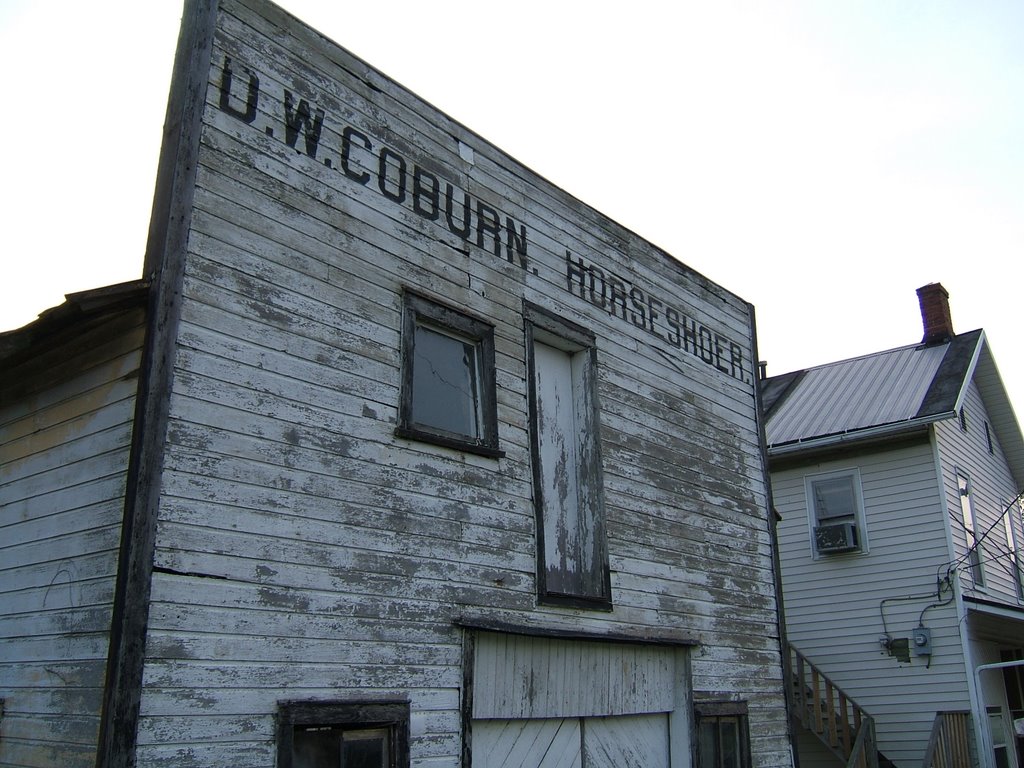
Thursday, March 30, 2006

SHAMEFUL WEALTH

I still cannot get over the fact that, when I turn a little knob in my kitchen, water comes out a pipe. The strange thing is that the water gets magically drawn from a well beneath the ground, and it comes up. People in the know tell me it has something to do with a pump, but I don’t care for the details; spare me them, please. I only care that I am in awe of water that comes up from a pipe and into my home when I want it to.

Historically, it was not always this way. There was a day when people had to travel with buckets to a community well, draw, take the sloshing container home, pour it into a cistern, then return to the well maybe sixteen more times, depending on how often the family planned to run the dishwasher. People bathed in rivers back then as well—which reminds me!

There is a miraculous little cubicle in my upstairs bathroom, enclosed by a curtain, containing a nozzle such as the one in my kitchen, only bigger and higher—situated over my head. The nozzle is unique in that someone has drilled lots of little holes into it. But you haven’t heard anything yet. There are two knobs in this cubicle, same as in the kitchen, and when I turn the left knob to the left, hot water comes from the nozzle. Hot water! Hot water with which I bathe! People in the know tell me that this has something to do with a water heater and, once again, a pump. But once again, I do not care to hear about it. It’s a miracle, and that’s the end of it.

Do you realize that, in days not long past, not even the palaces of kings contained such amenities? But if I told you of all the other luxuries in my home, you would blush. It is nearly sinful, what I possess.

My family is spared the trouble of gathering bits of wood to light fires under black stinky pots for cooking purposes. That’s right. Instead—are you ready for this?—we have a flat area on our countertop that, when other little knobs similar to those which operate the water are turned, make various parts of the countertop heat up. And the heated parts light up in the exact shapes of the bottoms of our pans. And the heat is hot enough to cook on!

I can no longer be quiet about any of this; I am too aroused by it all. Concerning physical, tangible blessings, Scripture says that with food and shelter we should be sufficed. So you can see that, even with the little I have told you about, I am blessed above and beyond measure. I will say no more. For if I told you of the means by which I answer nature’s call—indoors—and evacuate it from the premises—you would simply not believe me. You would hate me.

I am too ashamed of my wealth to tell you about it.

© 2006 by Martin Zender
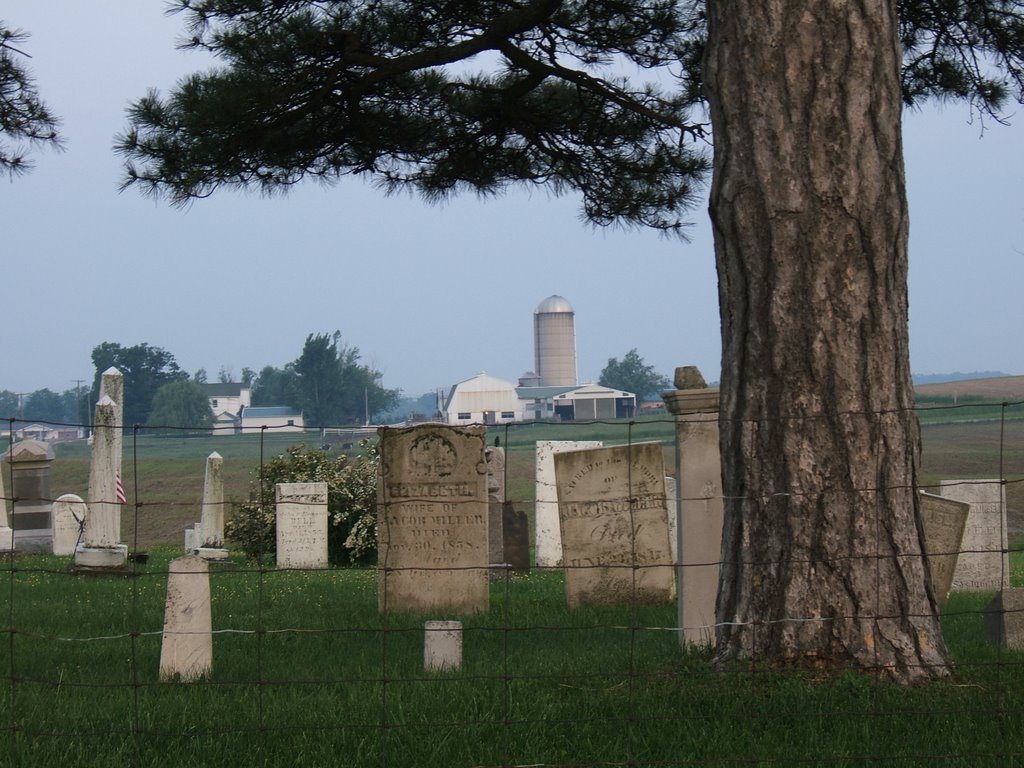
Wednesday, March 29, 2006

EFFECTIVE CURES FOR DEPRESSED WOMEN

And now, naturally, I am being asked by the women how they might cure their depression. It is amazing to me that women experience such a thing. It is like learning that the butterfly despairs of the magic flying powder dusted by God on its wings. I know, of course, that women are depressed. Married women are depressed because they live with careless, sleepy men. Some women feel they don’t have a purpose in life. Others are certain that the endless details of maintaining life will soon kill them. Women are multi-taskers, but they take it too far. I understand why, though: no one helps them. But just because a person can do everything, doesn’t mean a person should.

As a short-term fix, the woman who is at least well enough to leave the house should do so immediately, and take a friend. If she cannot find a friend, the Hershey Company provides them, wrapped in silver foil. That is correct. The first thing the depressed woman must do, with or without a human companion, is buy and eat lots of dark chocolate. This will take the edge off her immediate pain. You see? I do not give the same advice to the women as to the men. It does not help women to log onto the Internet and look at pictures of men in boxer shorts, even if such sites existed. There are no such sites for women on the entire World Wide Web, and neither should there be. There are several sites for chocolate, however, and for good reason.

Upon ingestion, dark chocolate improves the mood. It also releases hormones that simulate intimate dinners for two at fancy restaurants. It also unleashes boatloads of antioxidants that do mean but necessary things to boatloads of oxidants. It also slathers the soul with incredibly warm sensations; it smooshes in the mouth and makes the breadth of the oral cavity feel creamy. It doesn’t simply go down the throat, it flows down it like a dark, sweet waterfall. Hard chocolate crunches in the mouth (it feels good to the teeth), while soft chocolate melts there, enrapturing the tongue.

Next, the woman should go shopping. If she has any money left over after the chocolatefest, she should buy herself a new article of clothing. If she has no money left, she should at least feel the new clothing. Shopping does not necessarily mean buying things. The woman should pet the clothing over and over again (and perhaps rub it against her cheek), then try on new shoes after smelling them.

What if a woman is too depressed to leave the house? This woman should, first of all, comb the house for chocolate. If no chocolate can be found, I recommend sleep. Unconsciousness is a gift of God to both sexes. If one is dead to the world, one cannot be depressed. A further recommendation: close the drapes and engage a large electric fan. Waking up is a bitch, which is the reason for the drapes and the fan. Now, for the long-term solution.

Sigmund Freud stroked and stroked his little white beard trying to understand what women want. He never did figure it out. I figured it out two years ago. All women want is to be adored, appreciated, cherished, even pedastalized. For married women, this begins with the training of a husband, whose days of cherishing, I assume, are long behind him. Ah. What a waste of a good piece of meat: the husband. There is so much potential here for help, work and comfort, all lying dormant before the computer and the television. In a book titled Shagah, I instruct women how to train their men to cherish them, adore them, and help them uncomplainingly around the house. Women will be surprised to learn that men want this training. Though they are usually the last to admit it, husbands want directed by a benign feminine sex force. Shagah offers win-win relief, in the depression department, to both marriage parties. For those who apply its truths, Shagah marks the end of marital misery. Sorry now to have to tell you this, but you will have to wait until either Fall or Spring or Summer for this book.

For the depressed unmarried woman with children, here is my recommendation: Come Fall (or Spring, or Summer), find yourself a good man. (An average man will do.) Buy my book, train him, and live happily ever after. In the meantime, eat dark chocolate, shop in moderation, drink lots of water, sleep eight hours a night, and take long, slow walks every day, no matter what the weather.

For the depressed unmarried woman with no childr—

Hm. As soon as I meet one of these, I will advise.

© 2006 by Martin Zender
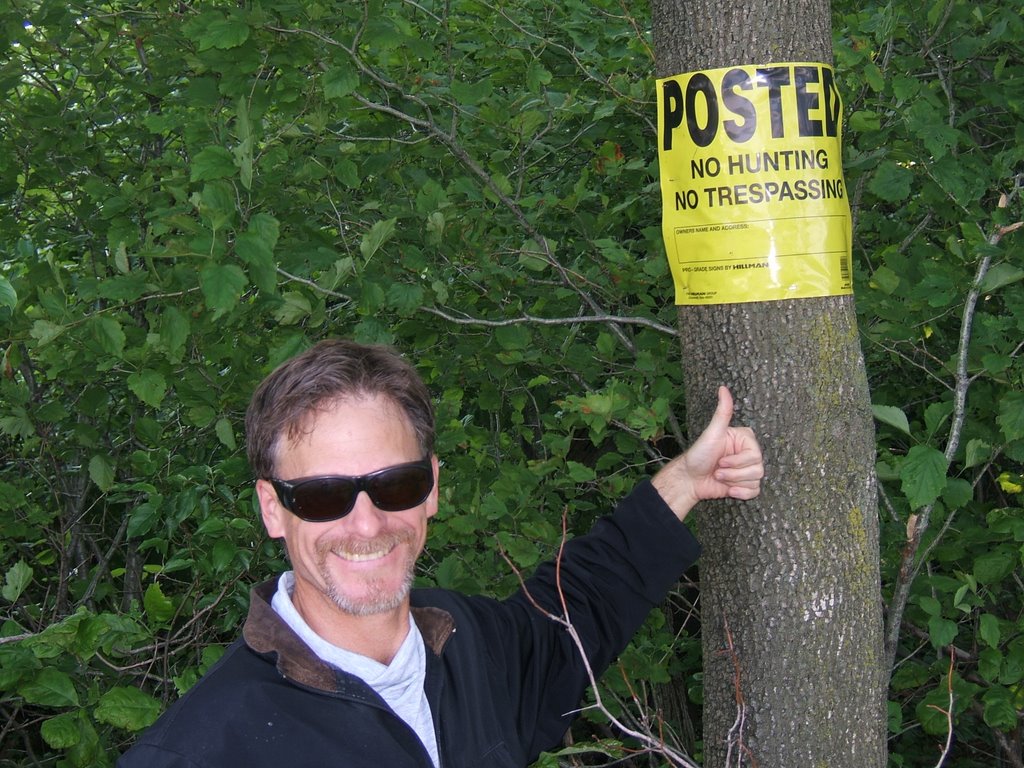
Tuesday, March 28, 2006

NUCLEAR WAR AND THE BIKINI CURE MALE DEPRESSION

A single guy I know gets frequently depressed. He lives in Northern Ontario—sorry for the redundancy. He lives where the sun is rarely seen and the roads are so muddied and pot-holed that the local car dealership has three moon rovers on the lot.

This guy was once so depressed that he wanted to kill himself. He called me and fished covertly for an immediate remedy to his mental difficulty. Why did he call me of all Earth’s mortals? I am the great Martin Zender, confidant of God, holder of the keys to people’s happiness. Good thing, then, that I did have a remedy at hand. Some day people may recognize my wisdom and make me their first resort rather than their last. So I said to the man, “Go on the Internet and look at pictures of beautiful women in bikinis. Not pornography, just beautiful women in bikinis.” There was silence on the other side of the line. “The bikini was named after the atoll in the South Pacific where the first atomic bomb was detonated,” I continued into the silence. “When atom bombs are falling, people forget how depressed they are. It happens all the time. Imminent nuclear war and two-piece swimsuits take the male mind from all other problems.”

My friend was taken aback at first, but then warmed to the idea. Oh, but this wasn’t an idea—it was a cure. I told him that my simple solution would relieve him instantly. It would make him want to live again, at least for the rest of the afternoon. It was the free, legal, God-inspired solution to his problem. In some parts of the world, I told him, the sun actually reported for celestial duty. In some parts of the world, I said, beautiful women wore extremely small bathing suits.

He said, “You know, I do feel better when I look at a beautiful woman.”

Well, duh. Do I have to tell you to eat, too? Must I instruct you to bathe? To breathe?

The annual Sports Illustrated Swimsuit expedition embarked upon by my two older sons and me raises the eyebrows of embarrassed/horrified people who may, in their lifetimes, have discussed sex once—with the obstetrician. The embarrassed/horrified people had sex because they have children, but “the dirty part” came and went in the dark and lasted as long as it took to disrobe and disburse seed. And God forgive all parties for what made the seed come out. And God forgive Himself for having invented beauty in the first place.

It is stupid, in my opinion, for fellow testosteronians to pretend among ourselves that we could take or leave the bikini and its inhabitant. The cover of this particular Sports Illustrated is an anomaly in the midst of an evil eon, for it opposes everything we know so far of this damned winter. I praise Jesus for that. To refuse to look at such respite is to spit in the face of God. It is to slap away a reasonably priced escape ladder dangled by the Deity’s celestial helicopter.

I will have no awkward moments with my sons. I refuse to allow into my home the time-tested “ignore sex/screw up your kids” syndrome. I refuse to slip on the divine banana peel (the bikini and its inhabitant) and then pretend that I didn’t. My boys are looking anyway, so why not accompany them, foot the bill and get shrimp out of it? The more normal I make it (and it is so very normal), the less powerful its pull. The bikini and its inhabitant will always pull, but one can diffuse the freak side of the power. Religious people habitually make normal things freakish by silently (or vocally) condemning natural inclinations. This is a recipe for the production of criminals. The criminal starts and may finish in the closet. At worst, he wreaks mayhem among the less religious (and thus, the less peace-loving) citizenry. I prefer a nice quiet trip to Waldenbooks—followed by cheese rolls and shrimp—to abandoned carnal mayhem followed by an i.d. check at the state penitentiary.

Some very ingenious people designed the swimsuits worn by the SI models.

In some other corner of the world, the sun, apparently, has escaped its box.


© 2006 by Martin Zender

Monday, March 27, 2006

HOT SOFT CHEESE ROLLS

My two older boys and I enjoyed our annual Sports Illustrated Swimsuit Issue date last Saturday. On this annual date, I drive them to the mall, buy the magazine, hand it over to them, then drive to Red Lobster while they take turns perusing the pages and not saying much. When we get to Red Lobster, we ordinarily wait forty-five minutes to an hour for a cozy booth in the non-smoking section. This is precisely what happened. The wait only enhances the satiation of hunger. Hot, soft cheese rolls in a wire basket covered with a napkin make mortals lose saliva from the corners of their mouths. Lift the napkin and cheesy heat wafts into the lantern-style light fixture. This is accompanied by iced teas and a black decaf served in a heavy, earthen mug.

While waiting for our table, many odd people filed past us. Some people in this world are beautiful, while others carry extra flesh and are misshapen. Three crippled souls rolled past in wheelchairs, one of whom rolled over Aaron’s foot. One poor chair-bound female stared out toward an invisible ocean and mumbled strange sayings while making wild gestures with her hands. Aaron said, during dinner, “Many people in this world are not right.” Artie said, “We are so blessed.” Aaron agreed with him, as did I.

There are so many different kinds of people in this world, and my sons and I are blessed to know the One Who made them all.

Together then, we thanked God and broke His bread.

© 2006 by Martin Zender